Sweets Photos Gain Movement with a Diagonal — Using the Slant
Published Jul 3, 2026
You shot a lovely sweet, but in the photo it looks flat and dull — that may be because you shot it straight-on and level. Just switching to a diagonal composition, running a plate edge or spoon on a slant, brings movement and depth to the same sweet. Here’s how to use the slant on your phone.
Why a diagonal works for sweets
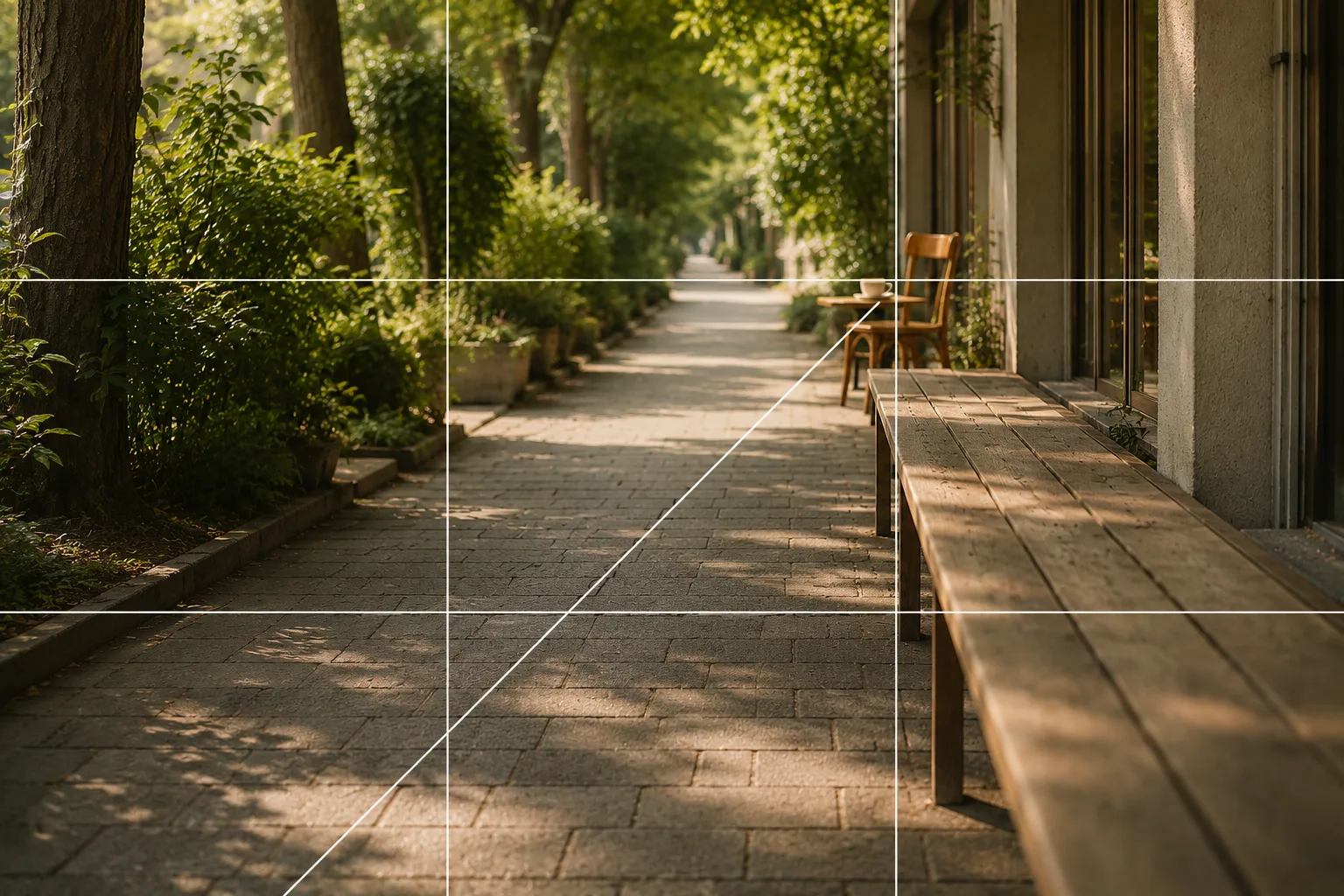
A diagonal composition weaves a slanting line — corner to corner — into the subject. Horizontal and vertical lines look stable but can turn monotonous; a slant moves the eye into the depth of the frame and builds solidity and rhythm even on a flat plate. Sweets have plenty of usable lines — the plate, a spoon, the layers of a parfait — so they pair well with the diagonal (→ What is a diagonal composition?).
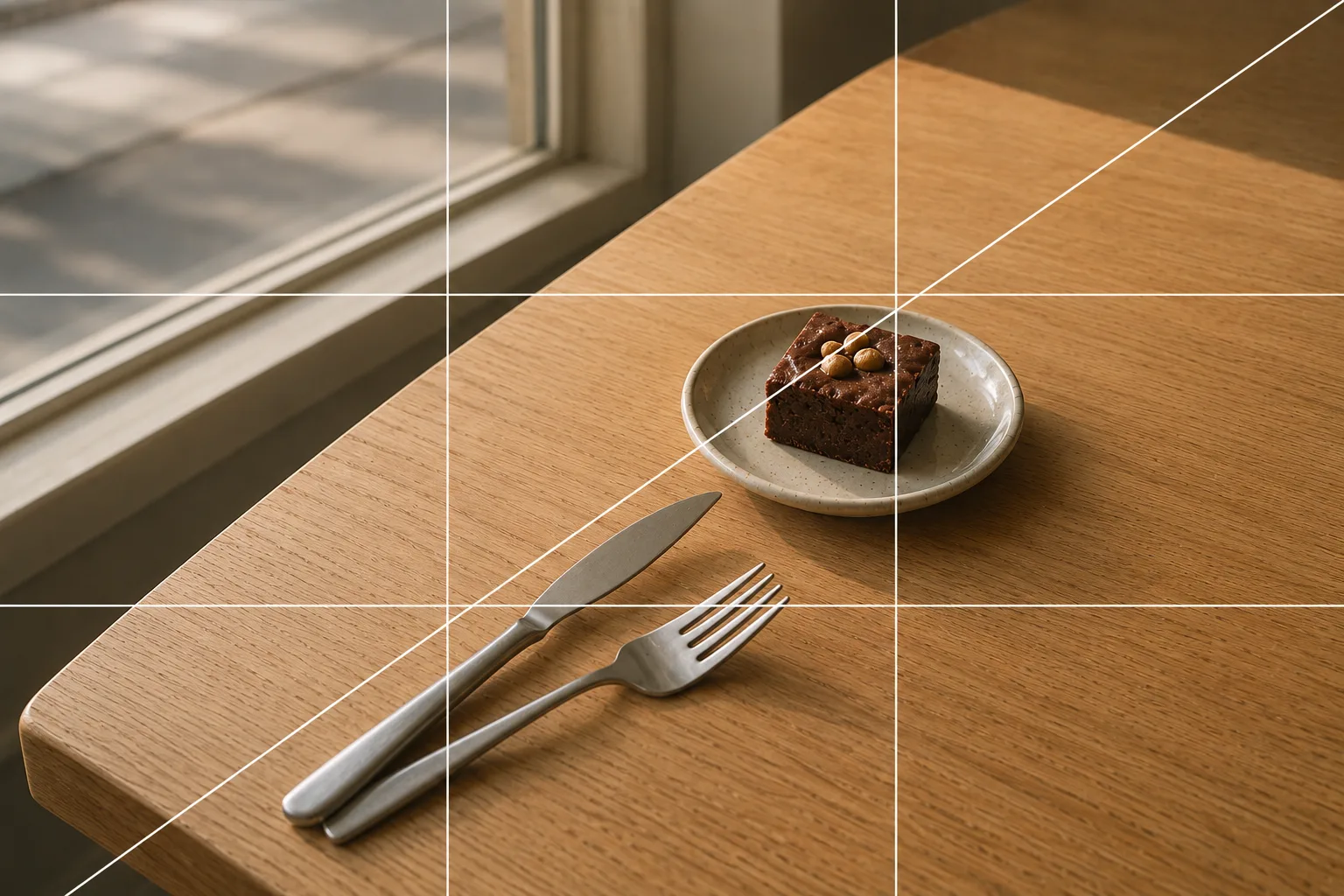 Composition guideDiagonal compositionSee the full guide for this composition →
The steps on your phone (3 steps)
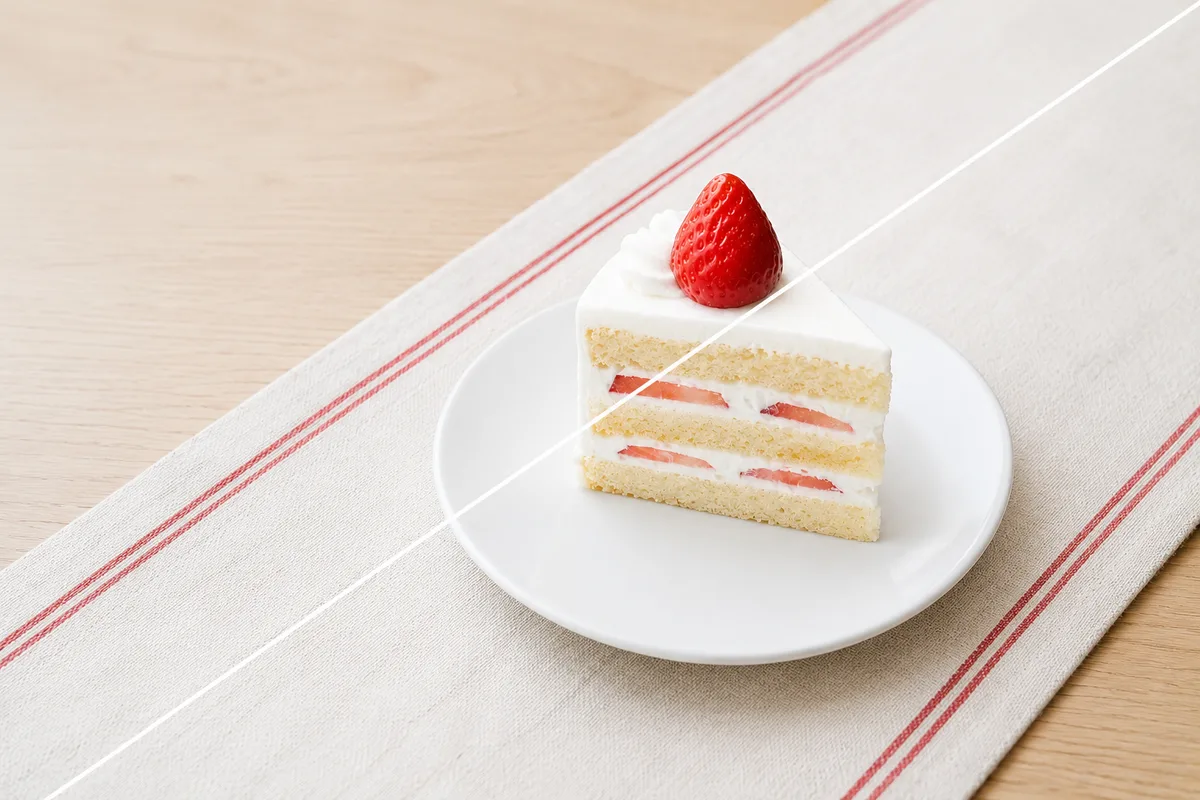
First, find a line you can use on the slant — a spoon or fork handle, the edge of a rectangular plate, the band of a placemat. Next, adjust your phone’s position and angle so that line runs corner to corner. Finally, place the part you most want to show (a strawberry’s cross-section, the peak of the cream) on or near the diagonal line and set focus.
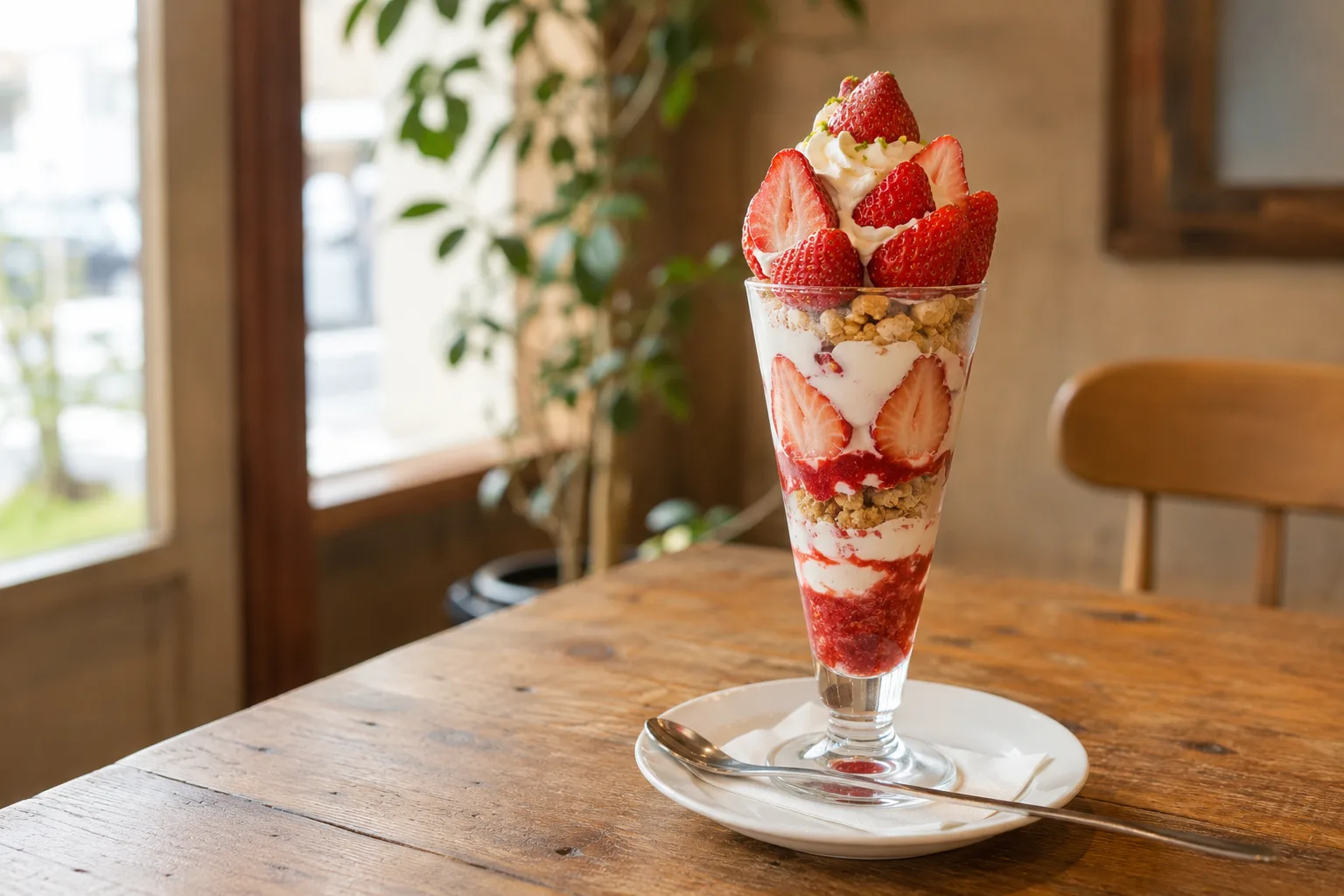
Low baked goods from overhead, tall parfaits from 45° — either way, the idea of “aiming the line at a corner” is the same.
Getting it right on iPhone and Android
A diagonal is easier to line up using the grid as a guide. On iPhone, turn on the grid in Settings → Camera and match the corners of the nine cells to the direction of your slant. Adjust brightness by tapping the subject and swiping up or down on the sun icon. On Android (Pixel, Galaxy, Xperia, AQUOS and others), turn on the grid from the settings menu and drag the brightness slider after tapping. Picture running the slanted line through the grid’s corners, and the diagonal you’re after falls into place (→ Turning on the grid).
Common mistakes and fixes
A half-hearted slant just looks like a tilted mistake — commit to running the line boldly corner to corner. Too many slanting lines clutter the frame, so pick the one that weaves into the subject. When the subject sits off the line, the diagonal doesn’t connect to it, so put the part you most want to show on or near the line. When a parfait goes flat shot straight-on, switch to a slightly downward angle and the layers of the glass start working as the diagonal.
Compare across compositions
The same sweet reads differently across a diagonal, the rule of thirds, and “fill the frame” (moving in for texture). Comparing them in the gallery below makes the “movement” a slant creates easy to see.
Overlay the diagonal frame at /en/try
How to run the slant is easier to grasp while you watch through the camera. Open the diagonal frame in the composition finder (/en/try?frame=diagonal) and a diagonal guide overlays your camera. Line a spoon or plate edge up with that guide and check how the movement comes out.
Start with just this
Find one usable slanting line, run it boldly corner to corner, and weave the part you most want to show into that line. Add a slightly downward angle, and a sweet that looked flat gains movement and depth.
FAQ
Which way should the diagonal run — up to the right or down to the right?
Either works, but generally a line rising from lower-left to upper-right feels bright and forward, while one falling from upper-right to lower-left feels calmer. Point a spoon or fork handle toward a corner and choose the direction where the tall part of the dish sits on the upper side, and it comes together naturally.
Won't a slant make it look tilted and off-level?
A diagonal composition isn't about tilting the whole table — it's running a line, like a spoon or a plate edge, on the diagonal. Keep the table level and build the slant with the placement of the subject or cutlery, and it reads as movement, not a tilt. Shooting from overhead lets you make a diagonal without worrying about level.
How do I shoot a tall sweet like a parfait?
Aim at a tall sweet from 45° and run the diagonal line made by the glass edge or the layers of cream across the corners, and you get height and movement at once. Straight-on goes flat and overhead loses the height, so a slightly downward angle with the diagonal in mind looks tastiest.
Example gallery
Related reading
Compositions used