What Are Leading Lines? Guiding the Eye to Your Subject on a Phone
Published Jun 27, 2026
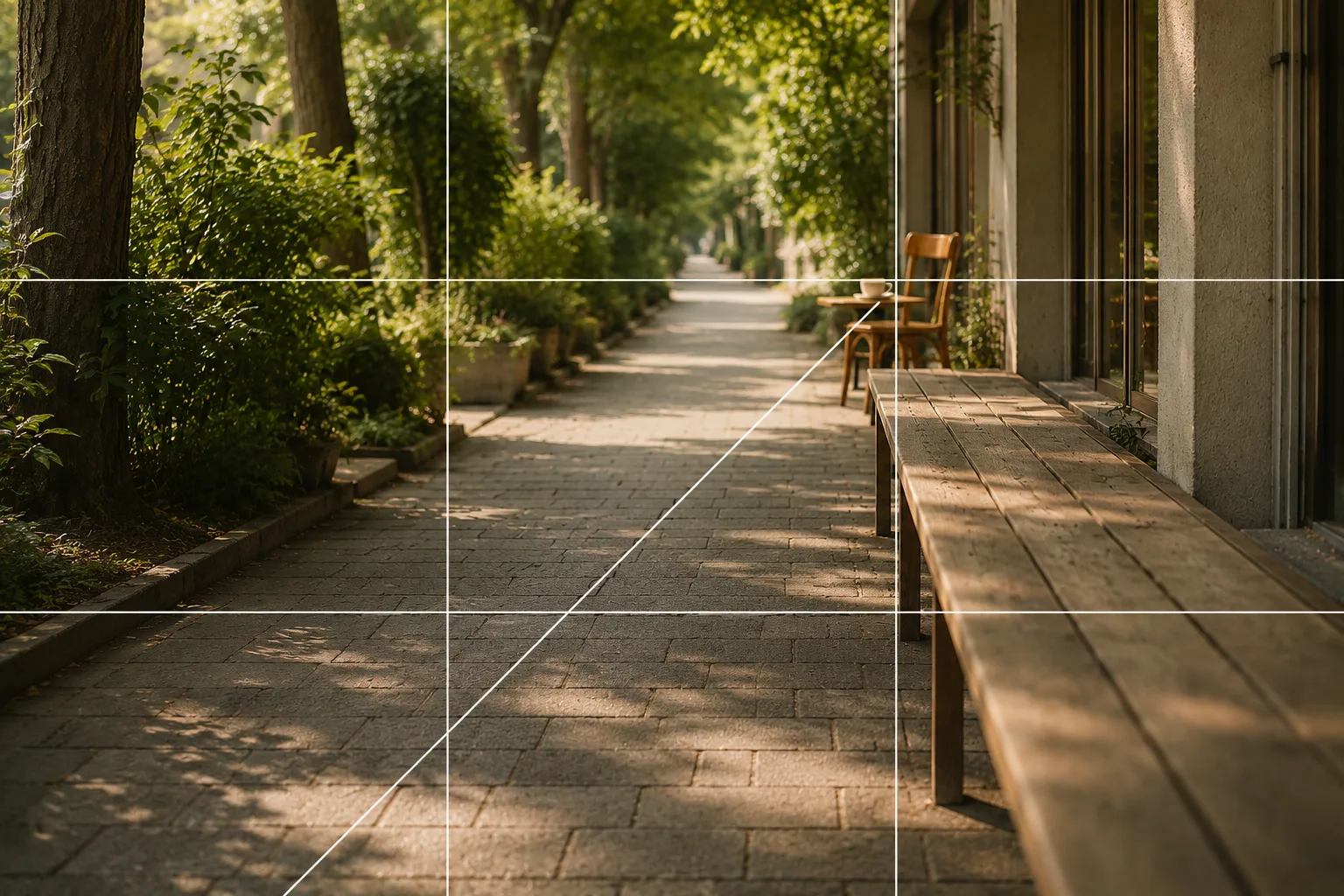
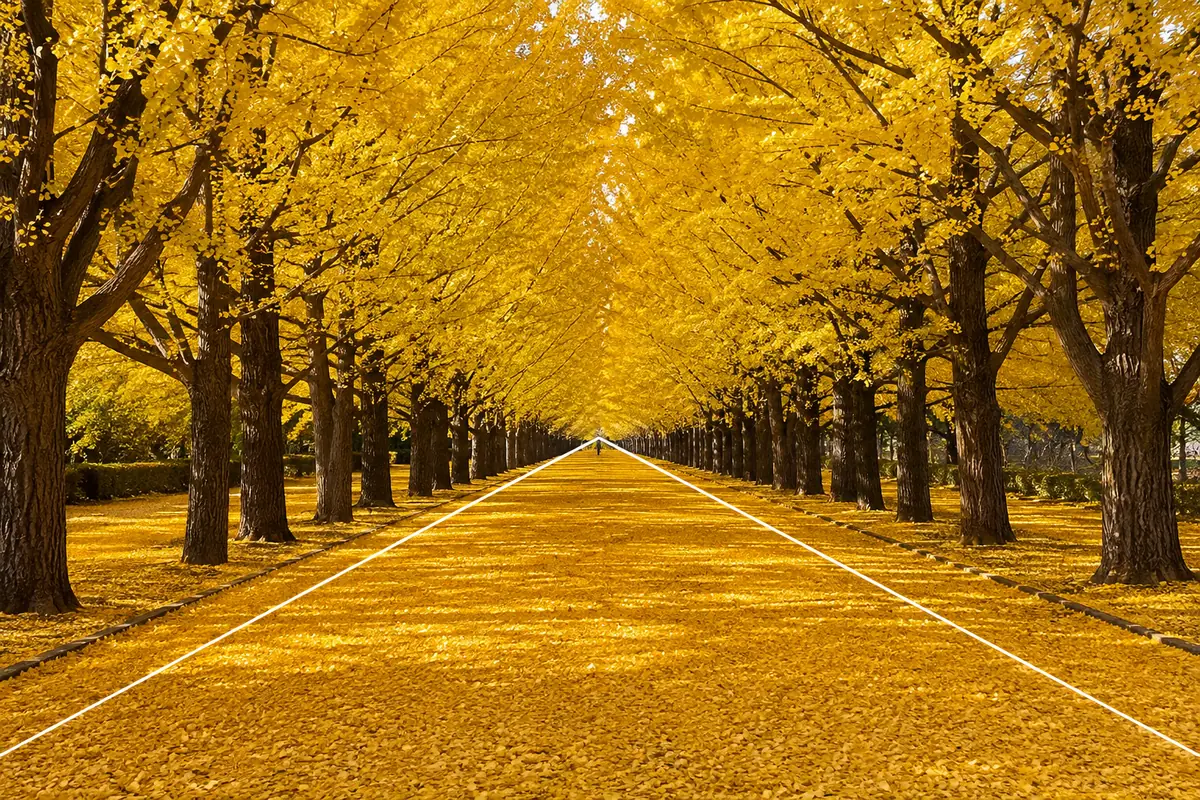
A leading-line composition uses a line in the photo (a road, a fence, a river) to guide the viewer’s eye toward the subject or into the distance. Because the eye naturally follows a line to where it goes, you end up with a shot that has depth and a sense of story.
Why lines work
The eye tends to travel along lines in the frame. When a line runs from the foreground into the distance, a flat photo gains a “moving-into-the-scene” feeling — depth. Put your subject at the end of that line and the eye is led straight to it.
How to use it
First, find a line that runs from the foreground toward the distance (or the subject). Roads, train tracks, hallways, rows of trees, rivers and shadows all work well. Then adjust where you stand and how high you hold the camera so the line starts near the foreground and heads toward the subject in back. Run the line on a slight slant and you add movement, pulling the viewer in further (→ Diagonal composition). Placing the subject at the line’s end, near a rule-of-thirds intersection, keeps things balanced (→ Rule of thirds).
A note of caution
Too many lines, or lines with no subject at the end, leave the eye wandering. With lines, where they lead is what matters. Give the line one subject worth seeing at its end, and clear stray lines and clutter out of the frame.
Start with just this
Find one line that runs from foreground to distance, and put your subject at the end of it. The eye traces the line and arrives at the subject — that alone gives your photo real depth.
FAQ
What are leading lines?
Leading lines use a line in the photo — a road, a fence, a river — to guide the viewer's eye toward the subject or into the distance. Because the eye naturally follows a line to where it goes, the shot gains depth and a sense of story.
Why do leading lines work?
The eye tends to travel along lines in the frame. A line running from the foreground into the distance gives a flat photo a "moving-into-the-scene" feeling — depth. Put the subject at the end of the line and the eye is led straight to it.
How do I use leading lines?
First, find a line that runs from the foreground toward the distance or the subject. Then adjust where you stand and how high you hold the camera so the line starts near the foreground and heads toward the subject. Placing the subject at the line's end, near a rule-of-thirds intersection, keeps things balanced.
What kinds of lines work as leading lines?
Roads, train tracks, hallways, bridges, rivers, fences, rows of trees, even shadows — any line in the frame that runs toward the distance or the subject. Lines don't have to be straight; ones that curve into the distance guide the eye just as naturally.
How is this different from a diagonal composition?
A diagonal composition aims to add movement by placing things on a slant. Leading lines aim to guide the eye toward the subject or into the distance with a line. Run a line diagonally and you get both, but the intent differs.
I can't find a line to use in the shot — any tips?
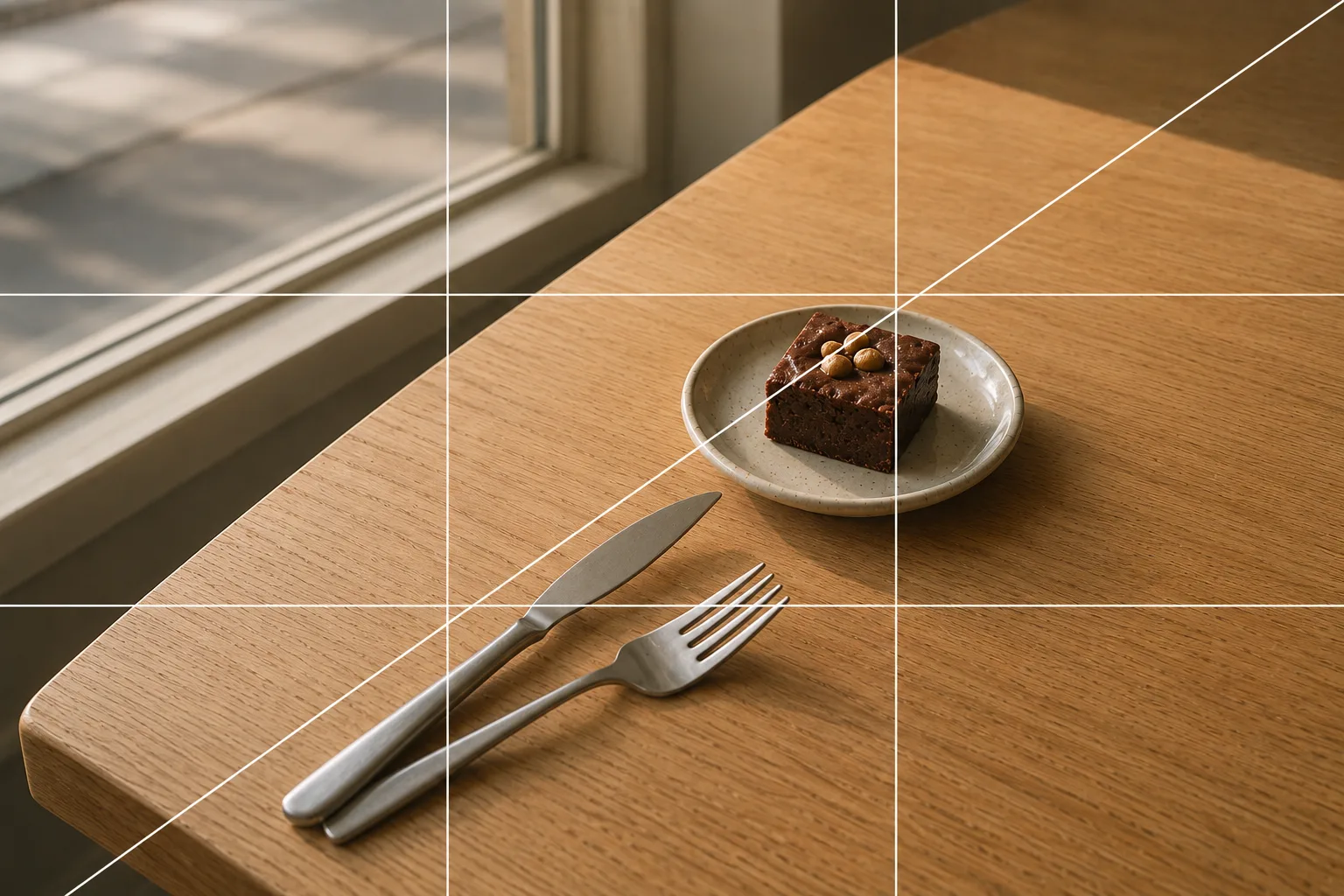
Lines are easy to miss at eye level. Crouch down low and floor lines, table edges and shadows suddenly become usable. Indoors, a desk edge or cutlery works; outdoors, a shadow or curb counts too.
This composition across subjects
Related reading
Compositions used


Related subject guides

Capturing Dogs' and Cats' Expressions — Fixing Motion, Darkness and Blur
Shooting Night Views and Illuminations Crisp — Why They Blur, and Night Mode

Shooting Vivid Autumn Leaves — Why They Look Flat, and Adding Dimension

Shooting Cherry Blossoms Strikingly — Why They Wash Out, and Using Color and Sky

Travel Photos Worth Remembering — Why They Look Like Postcards, and Cropping

Shooting Landscapes With Depth — Why They Look Flat and How to Level
Shooting Sunflowers Full of Energy — Why They Look Plain, and Using Blue Sky

Composing Stylish Café Photos — Why They Don't Pop and How to Fix It

Sweets Photos Gain Movement with a Diagonal — Using the Slant
Shooting Snow Truly White — Why It Turns Gray, and the Fix
Shooting the New Year's First Sunrise — Fixing the Blown-Out Sun and Tiny Sun
Shooting at Photo-OK Concerts — Fixing Black Frames, Blur, and the Tiny Stage
Plushie Photos While Traveling — When the Plush Loses to the Scenery or Tilts
Acrylic Stand Photos With the Scenery — Focus Misses and Melting Edges, Fixed
Shooting Sunsets — Why Sky-Only Shots Fall Flat and How to Catch the Magic Hour
Summer Festivals — Why Night Shots Blur, and Shooting Lanterns and Stalls
At the Beach — Why It Blows Out, and Fixing Level and Backlight
Photographing Ginkgo Avenues — Why They Look Flat and How to Use the Rows
Photographing Red Spider Lilies — Why the Red Blocks Up and How to Shoot Drifts