Photographing Ginkgo Avenues — Why They Look Flat and How to Use the Rows
Published Aug 27, 2026
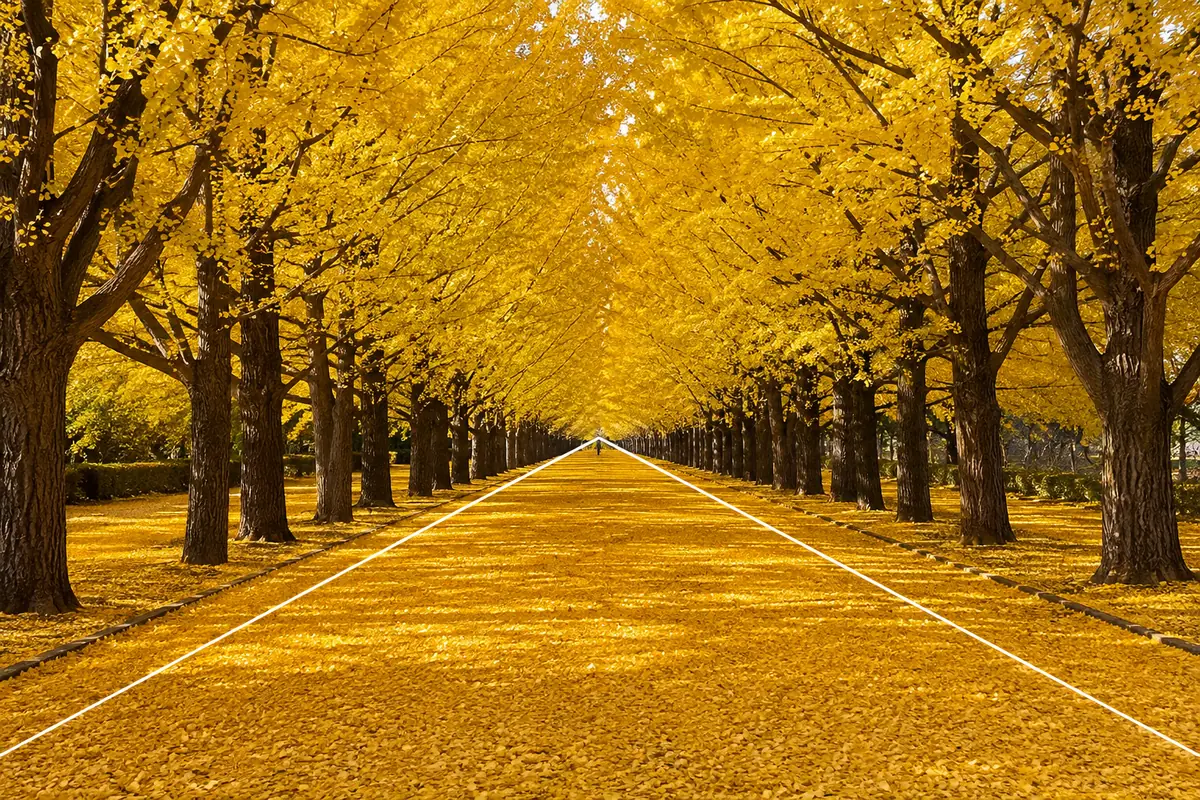
A ginkgo avenue can be overwhelming in person and oddly ordinary in a photo. Where maples are about moving in on a single leaf, ginkgo is different: the shape of the avenue itself is the subject.
Shoot the rows as a line into the distance
The single most effective move is to stand along the direction the trees run and shoot them as a line converging into the distance. Position yourself in the middle or at the edge of the path where you can see all the way down. The trees on either side and the path at your feet all carry the eye inward (→ Leading lines).
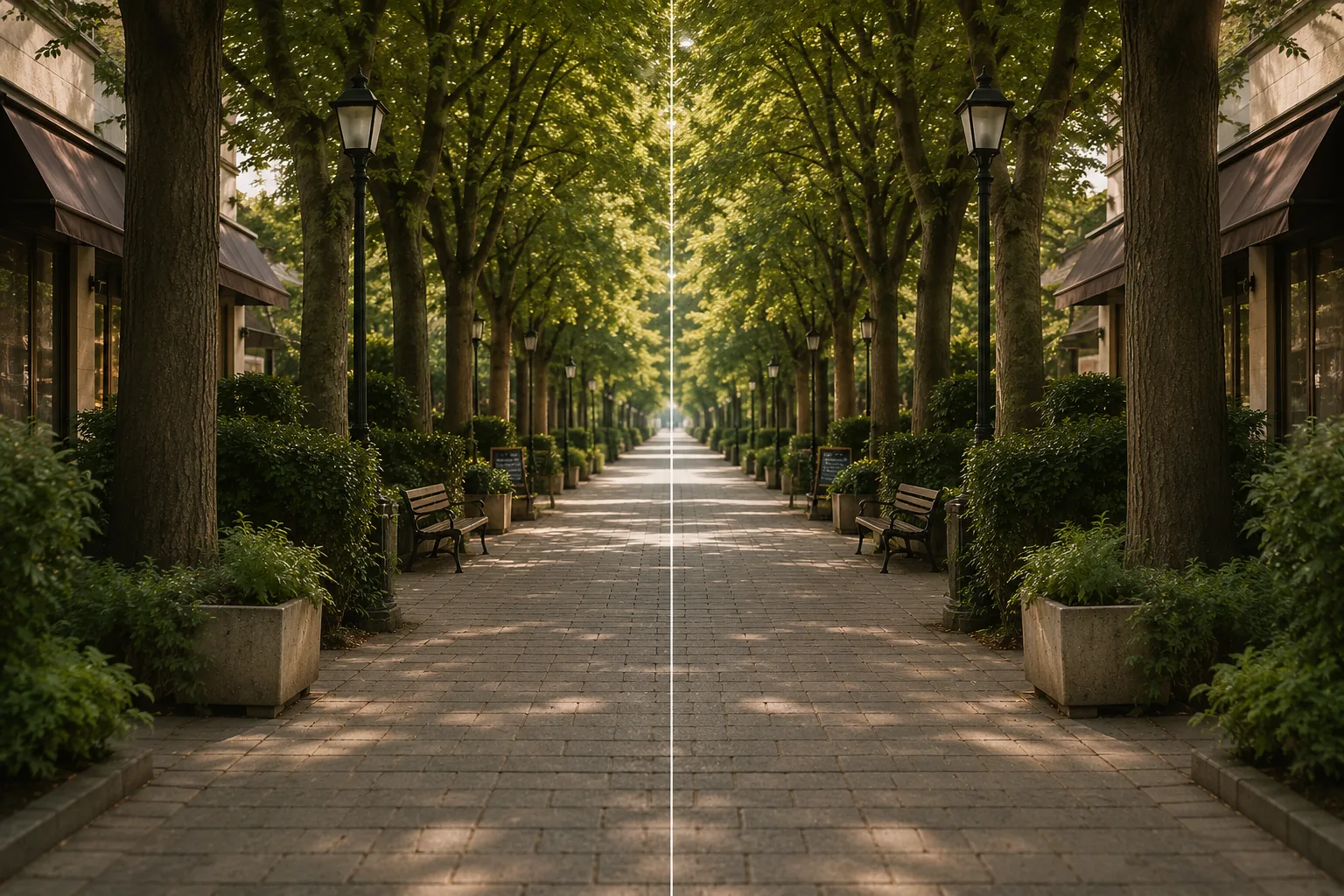
Standing dead center for a symmetrical frame reads as even more composed (→ Symmetry). Put a small figure or a building where the line arrives and the length of the avenue comes across. Shooting the rows from the side, lining a trunk up with a vertical thirds line settles the frame (→ Rule of thirds).
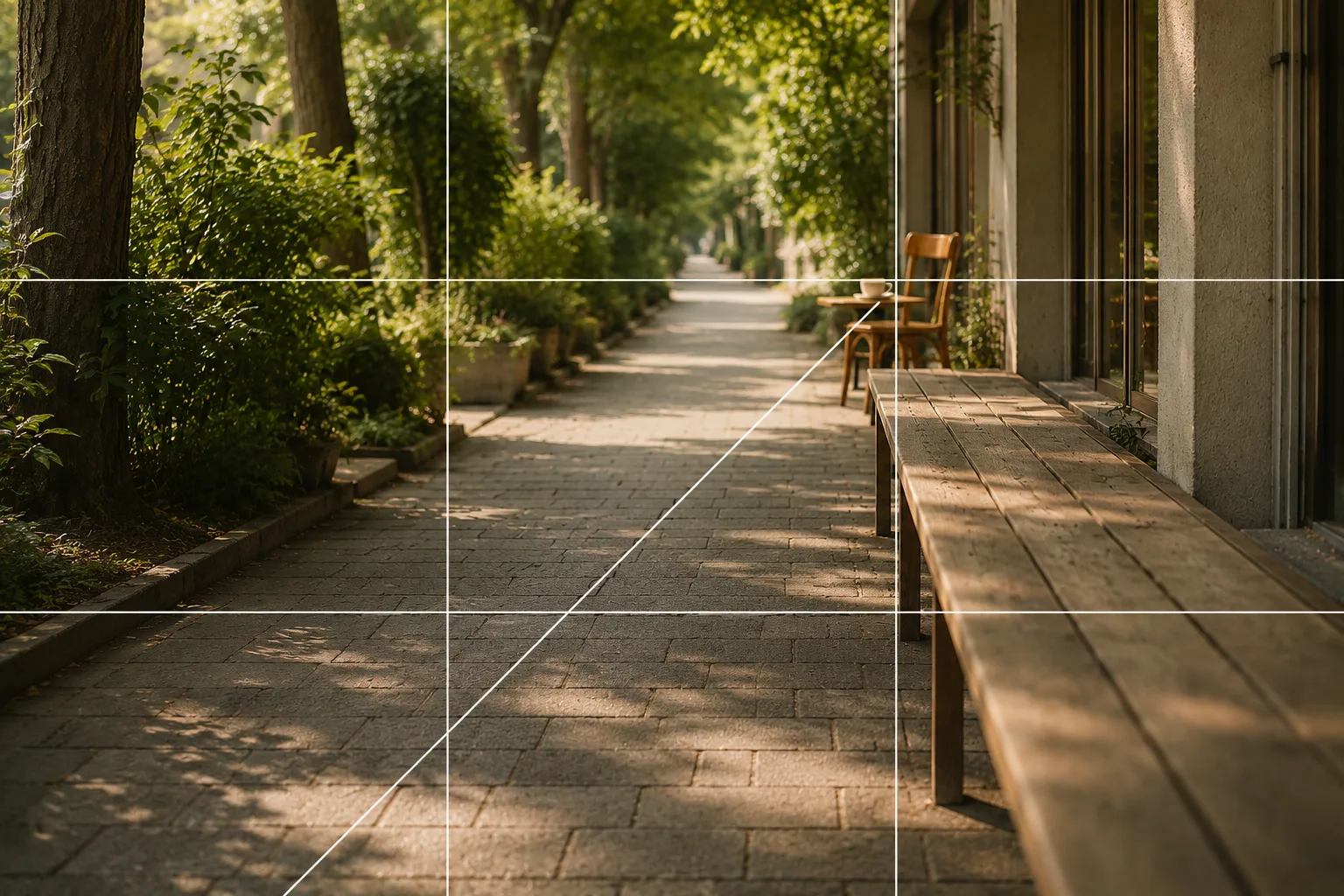 Composition guideLeading linesSee the full guide for this composition →
Look up and fill the frame with yellow
The other way to build a subject: aim upward and fill the frame with nothing but leaves. Leave the sky out and you’re left with yellow and the lines of the branches — the color becomes the subject (→ Filling the frame).
This angle is also your ally on a busy day. Point up and the crowds vanish. Even on a packed avenue, the frame you shoot looking up is quiet.
Put fallen leaves in the foreground
Later in the season the ground turns into a yellow carpet. Drop the camera low and let the leaves at your feet fill the foreground — foreground, middle and distance layer up into depth (→ How to photograph landscapes).
Crouch and lower the hand holding the phone to your feet; that’s all there is to it. Picking up a single leaf and photographing it in your palm makes another frame that says autumn.
Metering to deepen the yellow
Left on auto, the camera settles somewhere between the sky and the leaves, which leaves the yellow half-hearted. Tap the yellow leaves to move the reference onto them, then swipe up or down to go slightly darker and the color tightens up (→ Adjusting brightness).
Backlight or semi-backlight does the most work here. Put the sun behind the leaves and they glow with transmitted light — the same principle as maples (→ How to photograph autumn leaves). Low late-afternoon light turns the whole avenue gold (→ Shooting sunsets).
If you include a person, keep them small
A figure among the trees conveys the scale. Make them large, though, and it becomes a portrait instead. Keep them small in the frame, around where the line arrives. Shooting them from behind as they walk avoids faces and settles naturally (→ How to photograph travel).
Watch your footing
On avenues where the ginkgo nuts have dropped, mind where you step — they stain and they smell. Don’t pick them up bare-handed either; the flesh can irritate skin. When you crouch, keep your bag and phone off the ground. And a carpet of wet leaves gets slippery after rain.
Just this to start
Stand along the rows and shoot them as a line running into the distance. Tap the yellow leaves and drop the brightness one step. Those two bring a ginkgo avenue back to the gold you saw. On crowded days, look up and fill the frame.
FAQ
My ginkgo avenue photos come out vague.
Shot vaguely from the side, the yellow scatters and there's no subject. Stand along the direction the trees run and shoot them as a line converging into the distance — it tightens up immediately.
The yellow looks pale and dull.
Left on auto, the exposure lands somewhere between the sky and the leaves, which leaves the yellow half-hearted. Tap the yellow leaves to move the reference onto them, then go slightly darker. Including less sky helps as well.
It's too crowded to photograph the trees alone.
Look up and the people disappear. Aiming almost straight up and filling the frame with yellow leaves keeps the beauty of the avenue even on a busy day. Moving in on fallen leaves works for the same reason.
Example gallery
Related reading
Compositions used


Related subject guides
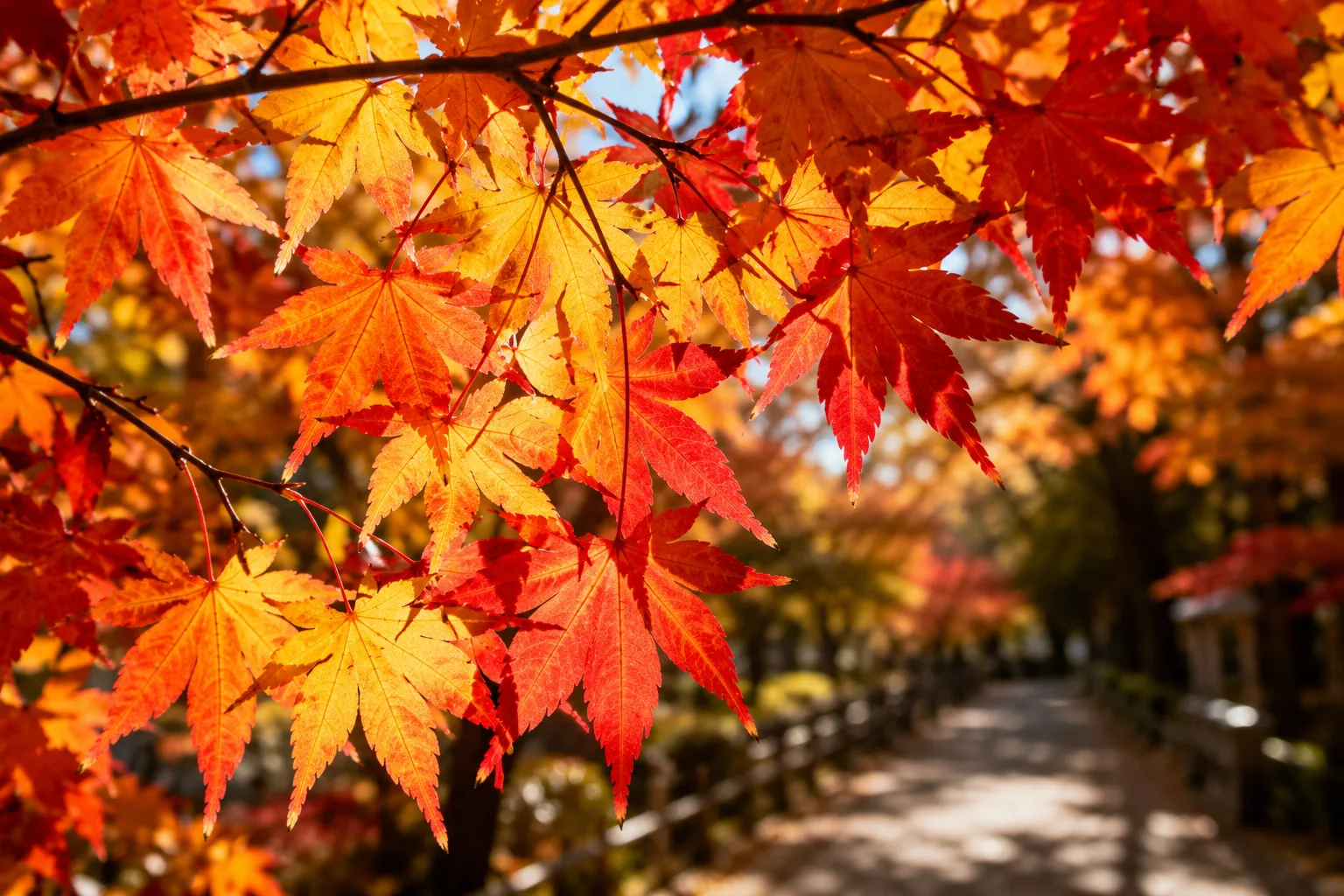
Shooting Vivid Autumn Leaves — Why They Look Flat, and Adding Dimension
Shooting Landscapes With Depth — Why They Look Flat and How to Level

Travel Photos Worth Remembering — Why They Look Like Postcards, and Cropping
Shooting Sunsets — Why Sky-Only Shots Fall Flat and How to Catch the Magic Hour
Composing Flowers That Stand Out — Closeness, Light and Background

Flattering Selfies, Naturally — Why They Look Awkward, Plus Angle and Light