Compositions
Rule of thirds, center composition, negative space and more — the everyday compositions for smartphone photos, explained one at a time. A reference the subject pages link into.
Basics4

What Is Composition? A Beginner's "Order to Learn It" for Phone Photos
Composition isn't a rule to obey but a way to make your point come through. Here's a beginner's learning order — first 4, then 6, then advanced — with links to each page.
What Is the Rule of Thirds? The Go-To Composition for Phone Photos
The rule of thirds places your subject on a 3×3 grid's intersections — usable straight from your phone's grid lines. A small off-center nudge instantly looks more polished.
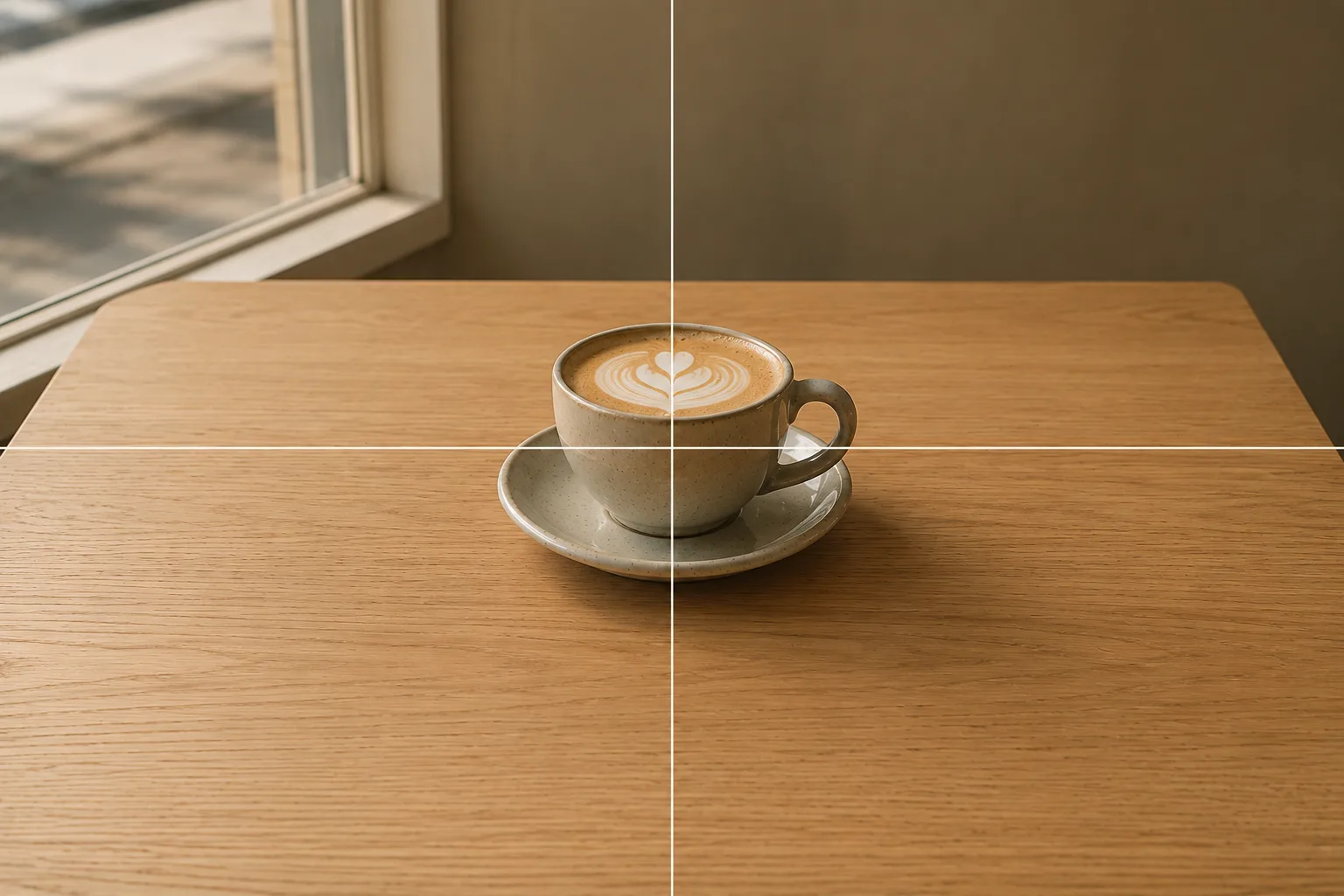
Centered Composition: When Putting Your Subject Dead Center Works
A center composition plants your subject in the middle. Often called amateurish, it reads strong when the subject is clear. See photo examples of where it works on a phone.

What Is Negative Space? Using "Emptiness" to Lift Your Subject
A negative-space composition leaves deliberate space around your subject to gather the eye, for a clean, refined shot. Here's a rule of thumb for balancing subject and space.
Move in & enlarge2

Fill the Frame: Going in Close to Make Your Subject Big
Fill the frame puts your subject large across the whole image for impact and texture — the fix when you stood too far back. Here's how to move in close on a phone.

What Is a Triangle Composition? Bringing Stability and Cohesion to Phone Photos
A triangle composition arranges several objects into a triangle for stability and cohesion. Great for plated food, small objects and flowers. Here's how to use it on a phone.
Guiding with lines3
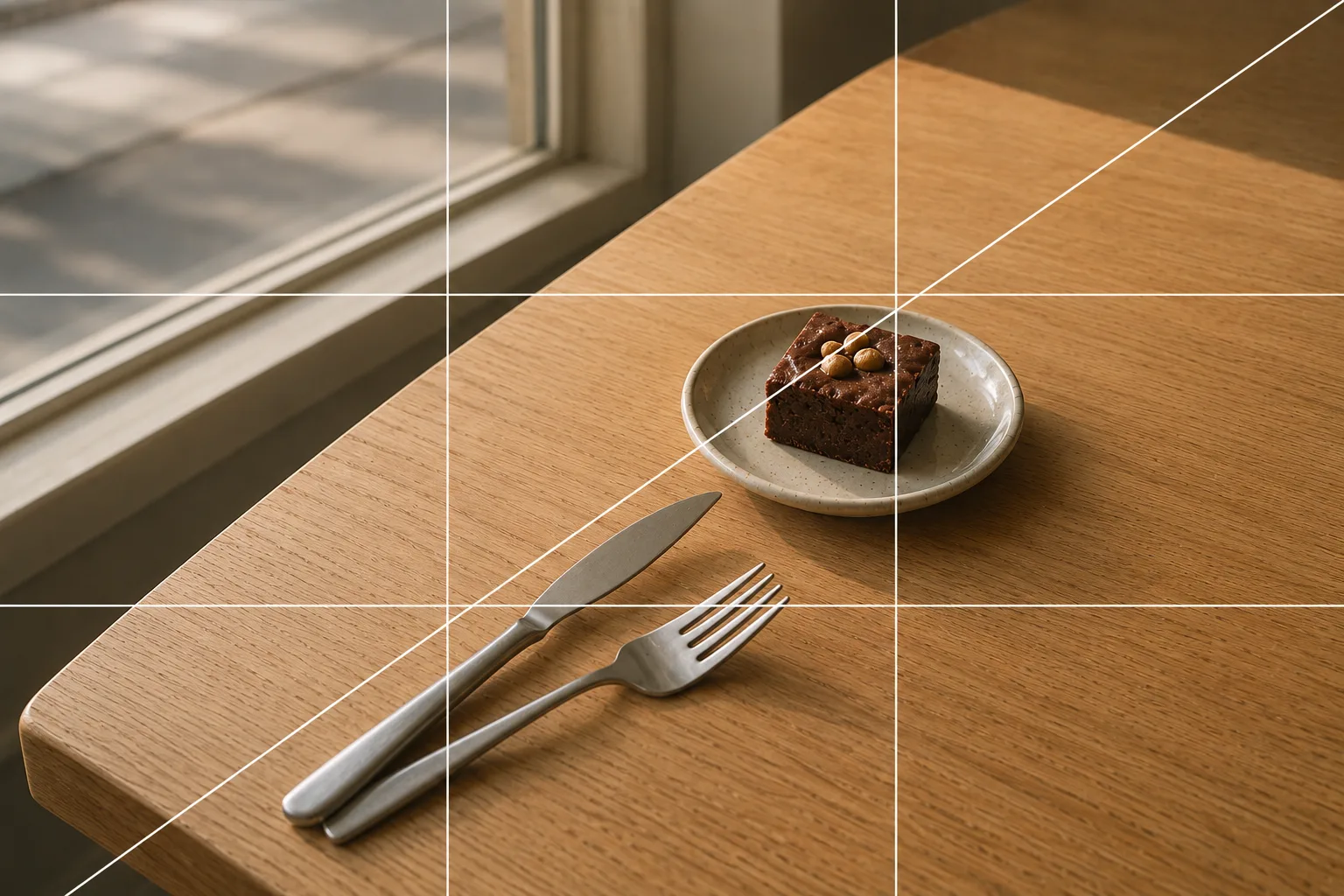
Diagonal Shots: How to Add Movement and Depth to Phone Photos
A diagonal composition runs a subject or line corner to corner to add movement and depth. Food, small objects, roads and stairs come alive once you notice the slant.
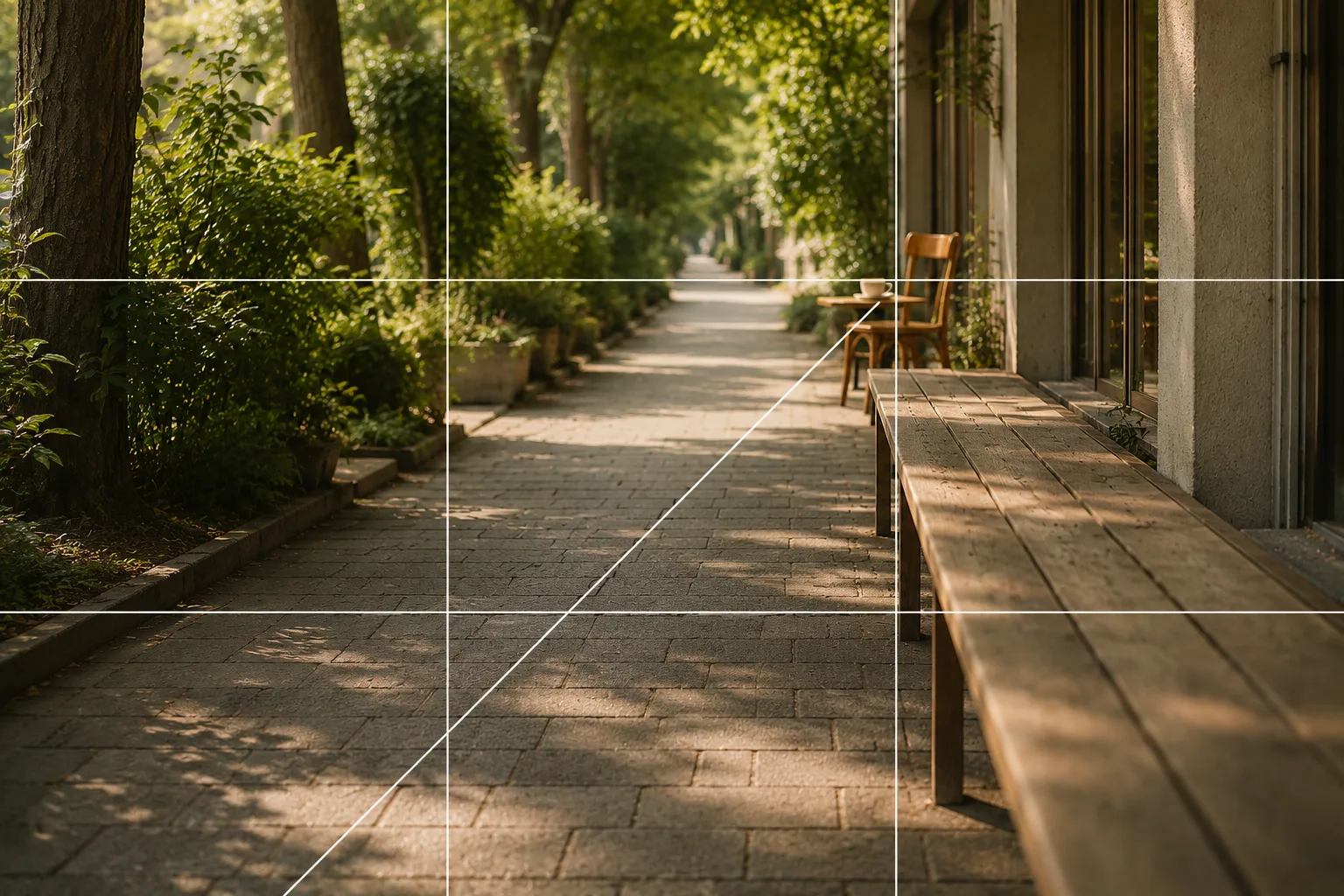
What Are Leading Lines? Guiding the Eye to Your Subject on a Phone
Leading lines use a road, fence or similar to guide the eye to your subject, adding depth and story. Here's how to spot and use them on a phone, with night and travel tips.

What Is a Radial Composition? Lines Fanning From a Point for Depth
A radial composition uses lines fanning from a single point to add depth. Sunflowers, pizza and café ceilings form it naturally — and here's how it differs from leading lines.
Frame & balance2

Symmetry Composition: A Tip for Stability and Beauty
A symmetry composition mirrors left and right for stability and beauty — great for buildings, tree-lined paths and reflections. Here's how to center the axis and balance margins.

Framing Composition: Using a Foreground Frame to Lift Your Subject
A framing composition surrounds your subject with a foreground window or branches, for depth and story. Here's how to find a frame and set focus on a phone.