What Is a Radial Composition? Lines Fanning From a Point for Depth
Published Jun 27, 2026

A radial composition makes the most of lines fanning out from a single point in the frame. As the lines gather at the center, the eye is drawn there, and a phone photo that would otherwise read as flat gains depth, spread and sometimes real impact.
Why radial lines work
The eye follows lines and is naturally pulled to the point where they meet (the vanishing point). Radial lines suggest motion in both directions at once — gathering toward the center and spreading from it — so the photo gains energy and dimension. When the subject itself is radial (a sunflower, a pizza), composition and subject line up perfectly, and the effect lands most clearly.
How it differs from leading lines
A similar composition is the leading line. Both guide the eye with lines, but the intent differs. Leading lines use one (or a few) lines to lead from the foreground toward the subject or distance. A radial composition uses multiple lines fanning out from a single point, gathering the eye at the center. One road running straight into the distance is a leading line; add trees or buildings on both sides converging to a point, and it becomes radial.
How to use it
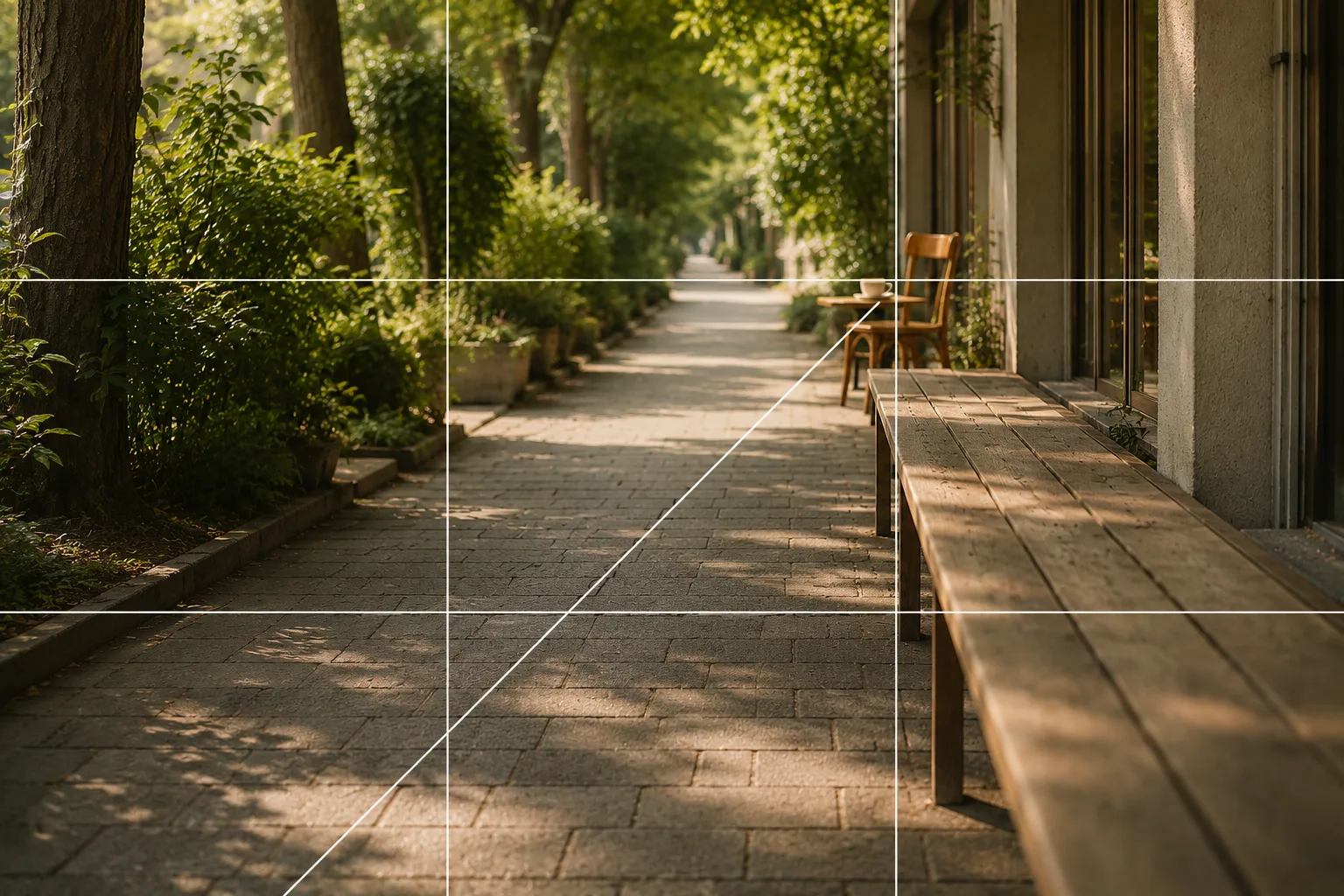
First, find a spot where lines converge on a single point — an avenue of trees, train tracks, a hallway, the gap between buildings, a row of café ceiling lights. Place that convergence point (the vanishing point) at the center to slightly above center, and adjust where you stand and how high you hold the camera so the lines radiate outward. If the subject is itself radial (a sunflower, a pizza, a whole cake), shoot the center from straight overhead or head-on to make the radial pattern pop.

A note of caution
If you focus on the lines but leave no subject at the convergence point, the eye gathers at the center only to find “nothing to look at.” Give the center, or the origin of the radial lines, a subject worth seeing or a striking opening (sky, light). Forcing lines to converge where the subject isn’t radial looks unnatural, so it’s quickest to use this where the radial pattern appears naturally — flowers, ceilings, tree-lined paths, an overhead plating.
Start with just this
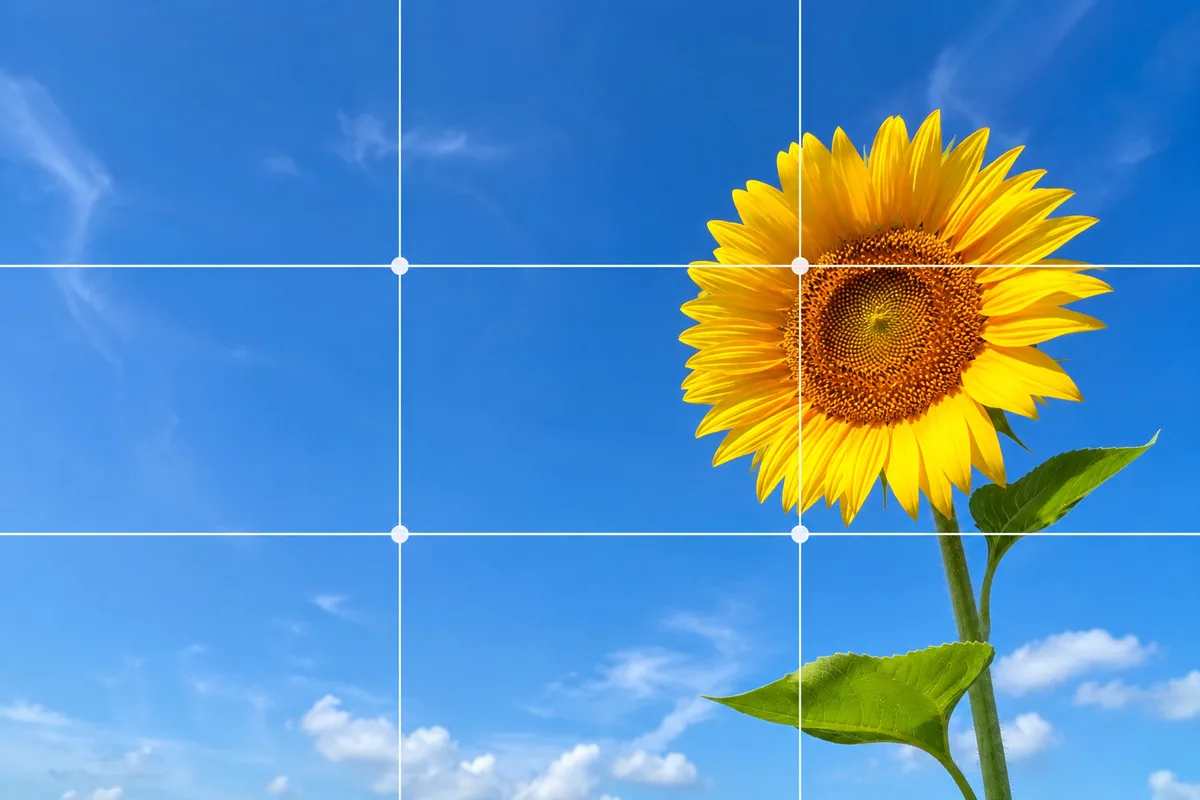
Find a subject where lines gather at a center, and place that point near the middle of the frame. That alone brings out real depth. Start with the heart of a sunflower, the center of a pizza, or a straight avenue of trees (→ Photographing sunflowers / Café photos).
FAQ
What is a radial composition?
A radial composition makes the most of lines fanning out from a single point in the frame. As the lines gather at the center, the eye is drawn there, and the shot gains depth, spread and sometimes real impact.
How is it different from the rule of thirds?
The rule of thirds places the subject on an intersection. A radial composition instead uses multiple lines that converge on, and spread from, a single point (the vanishing point). Shift that point toward a rule-of-thirds intersection to add a bit more movement.
How is a radial composition different from leading lines?
Leading lines use one (or a few) lines to guide the eye toward the subject or distance. A radial composition uses multiple lines fanning out from a single point. The aims are similar, but the radial gathers the eye at a center (the vanishing point) and spreads out from there.
What subjects can form a radial composition?
Flowers whose petals spread from a center like sunflowers, a sliced pizza or whole cake, café ceiling lights, or a straight avenue of trees or train tracks running into the distance. The trick is finding lines that converge on a center.
This composition across subjects
Related reading
Compositions used

Related subject guides

How to Photograph an Oshi Shrine Cleanly — Clutter, Darkness and Tilt
Shooting Sunflowers Full of Energy — Why They Look Plain, and Using Blue Sky

How to Make Food Look Delicious — Why It Looks Bland and How to Fix It

Composing Stylish Café Photos — Why They Don't Pop and How to Fix It

Shooting Landscapes With Depth — Why They Look Flat and How to Level
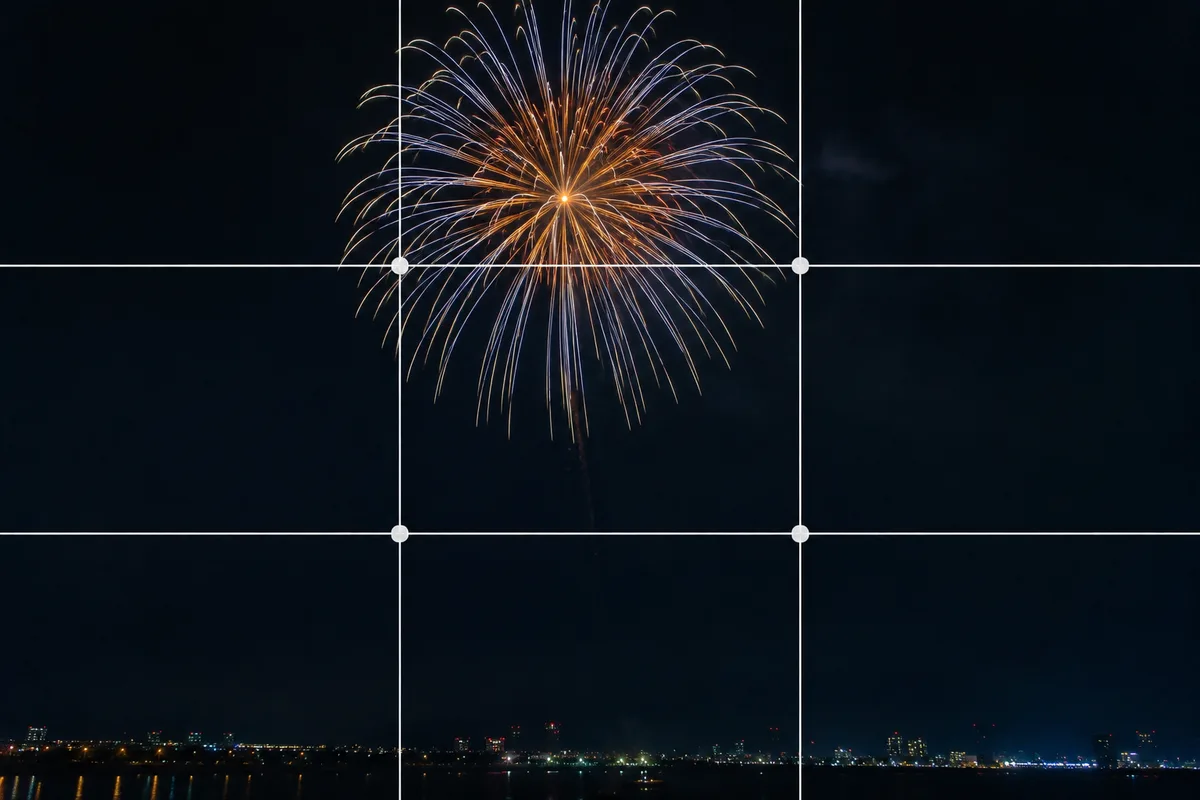
Shooting Fireworks Big and Crisp — Fixing Blur and Timing

Group Goods Photos at Fan Meetups — Clutter, Shadows, and Uneven Layouts, Fixed
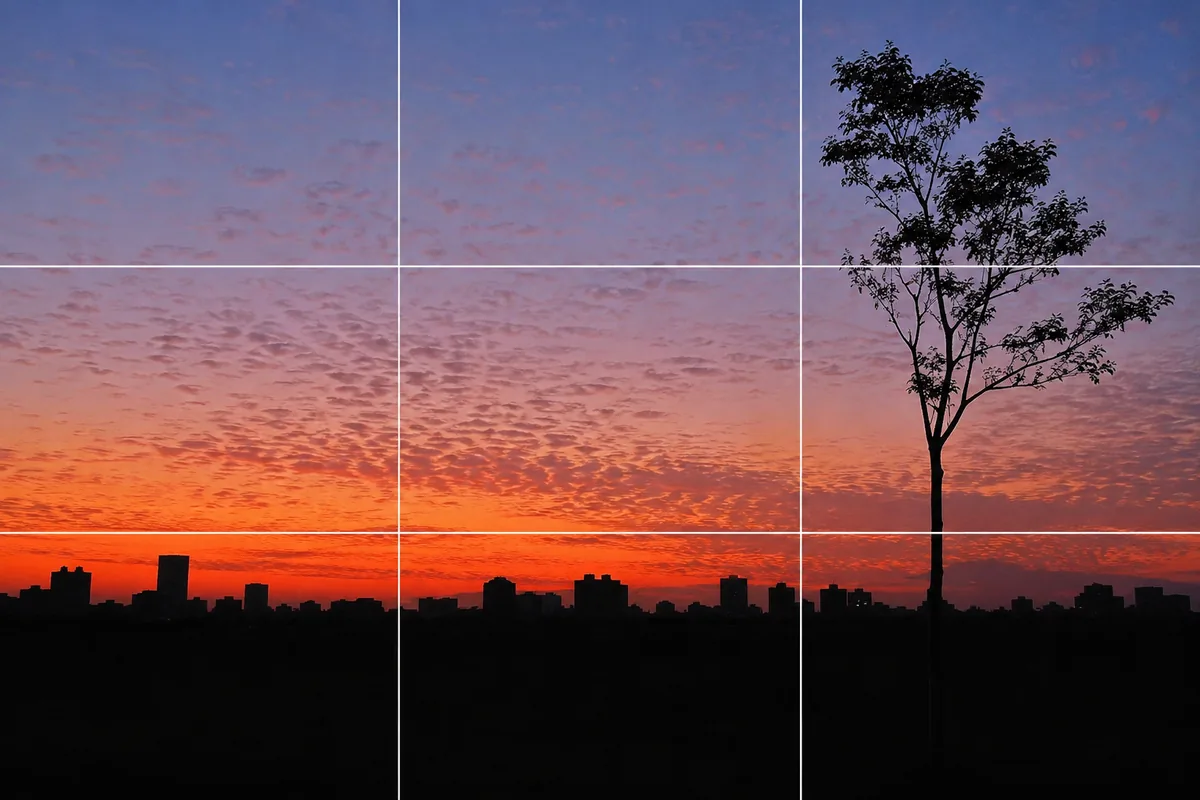
Shooting Sunsets — Why Sky-Only Shots Fall Flat and How to Catch the Magic Hour
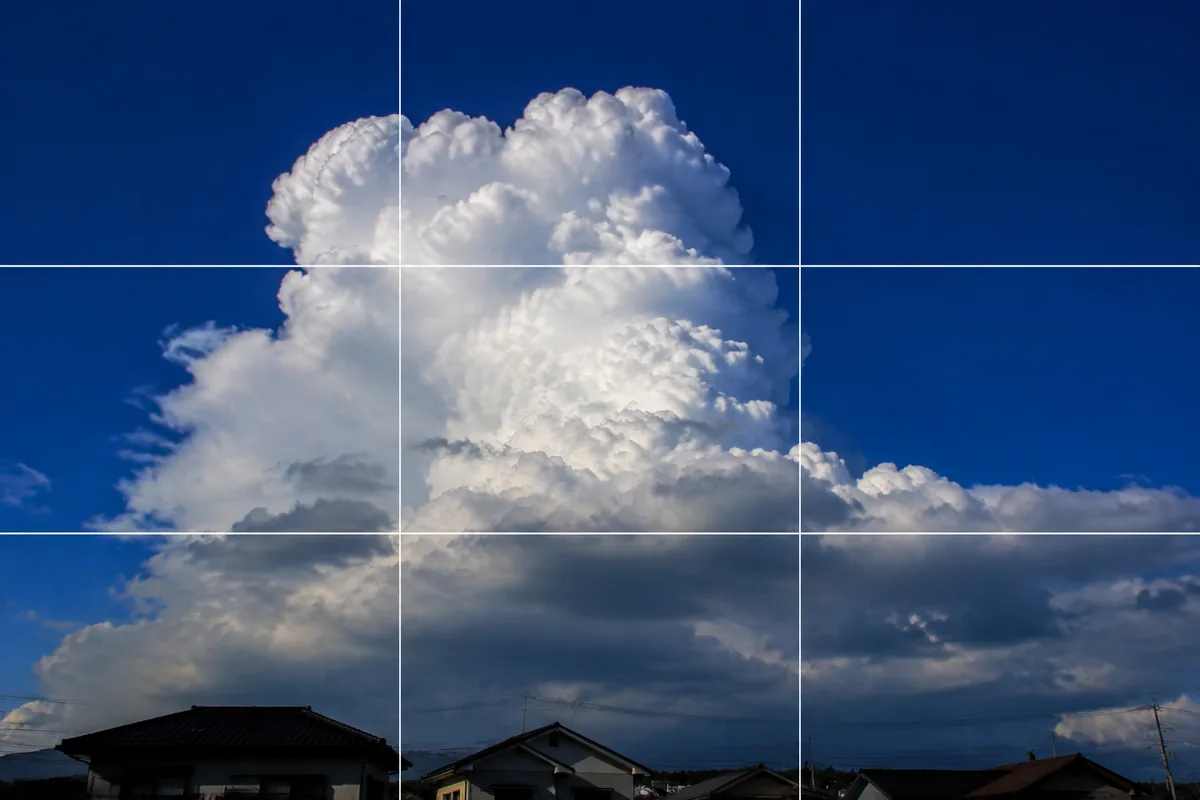
Summer Skies and Towering Clouds — Why They Shrink in the Frame