Summer Skies and Towering Clouds — Why They Shrink in the Frame
Published Aug 27, 2026
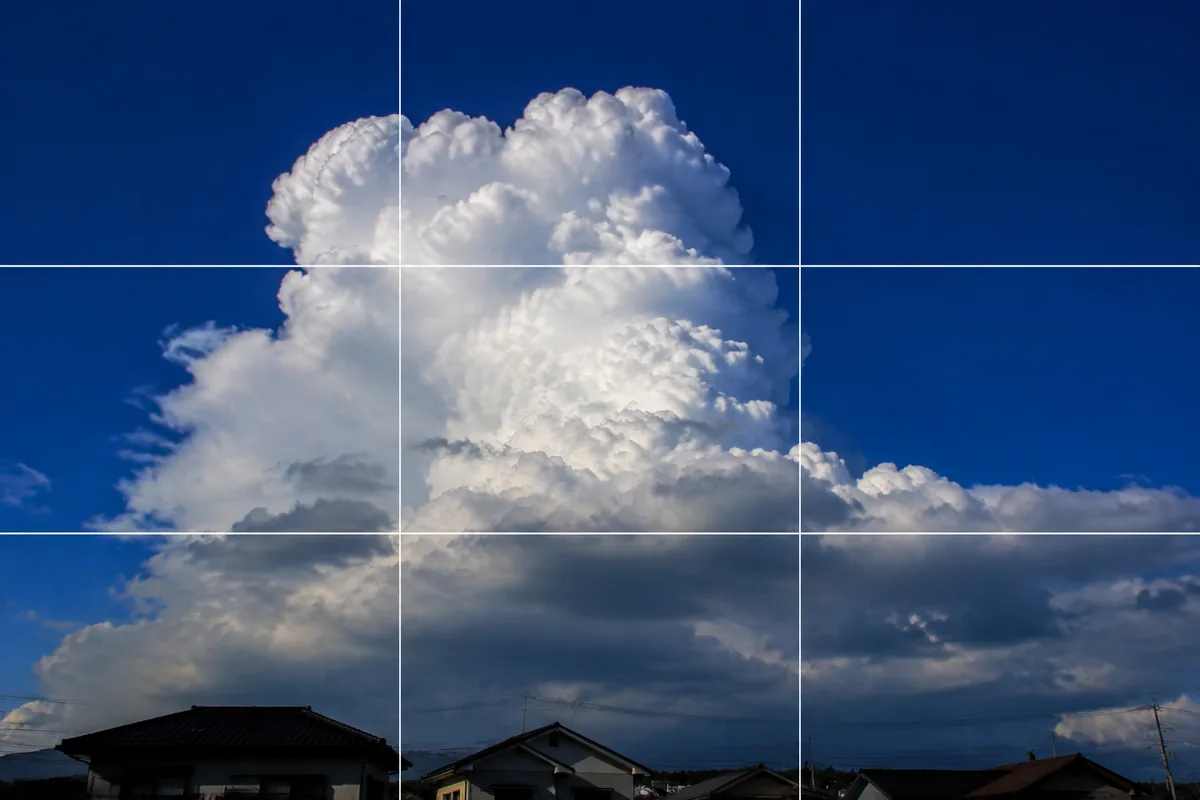
A towering summer cloud overhead can stop you in your tracks. Then the photo comes back small and oddly empty. Two things cause it: nothing to measure the cloud against, and the brightness of the sky. Both are fixable on the spot.
Let a little of the ground in
A frame of pure sky gives the viewer no clue about scale. Let a rooftop, the top of a tree, a power line, a person into the bottom of the frame and it reads as “the cloud goes up and up beyond all that.”
The bottom ten to thirty percent of the frame is plenty; more than that and the cloud stops being the subject. Deciding up front to give the sky two-thirds or more takes the hesitation out of it (→ Rule of thirds / How to photograph landscapes).
 Composition guideRule of thirdsSee the full guide for this composition →
Lower the brightness to deepen the blue
Left alone, the camera is pulled toward the bright sky and washes the whole frame out. Tap the sky, then bring the brightness down a little — the blue deepens and the shadowing inside the cloud sharpens (→ Adjusting brightness).
Push too far and the ground goes black, so step down one notch at a time and watch the screen. Including the sun itself drags the whole exposure, so keep it out of frame or tuck it behind a building.
Use the ultra-wide for the sweep
If your phone has a 0.5 ultra-wide, switching to it gets closer to what it felt like looking up. On a day when cloud fills the whole sky, that’s when it earns its keep (→ Optical vs digital zoom). Without one, simply backing up to take in more sky carries the same idea.
Bear in mind it stretches shapes toward the edges. Keep the cloud you care about near the center and leave the corners for sky or ground. When it’s the shape of one cloud you want, framing it with the main lens (1) or the telephoto end renders it more honestly.
Rays and gaps in the cloud
On a day when rays fan out through a break in the cloud, that’s your best chance of the day. Include the point they come from and the converging lines make a strong frame (→ Radial composition).
Around a summer downpour the color shifts minute by minute. Take several frames from the same spot and choose later. As the sun drops, it runs straight into sunset (→ Shooting sunsets).
 Composition guideRadial compositionSee the full guide for this composition →
Mirror it in water or glass
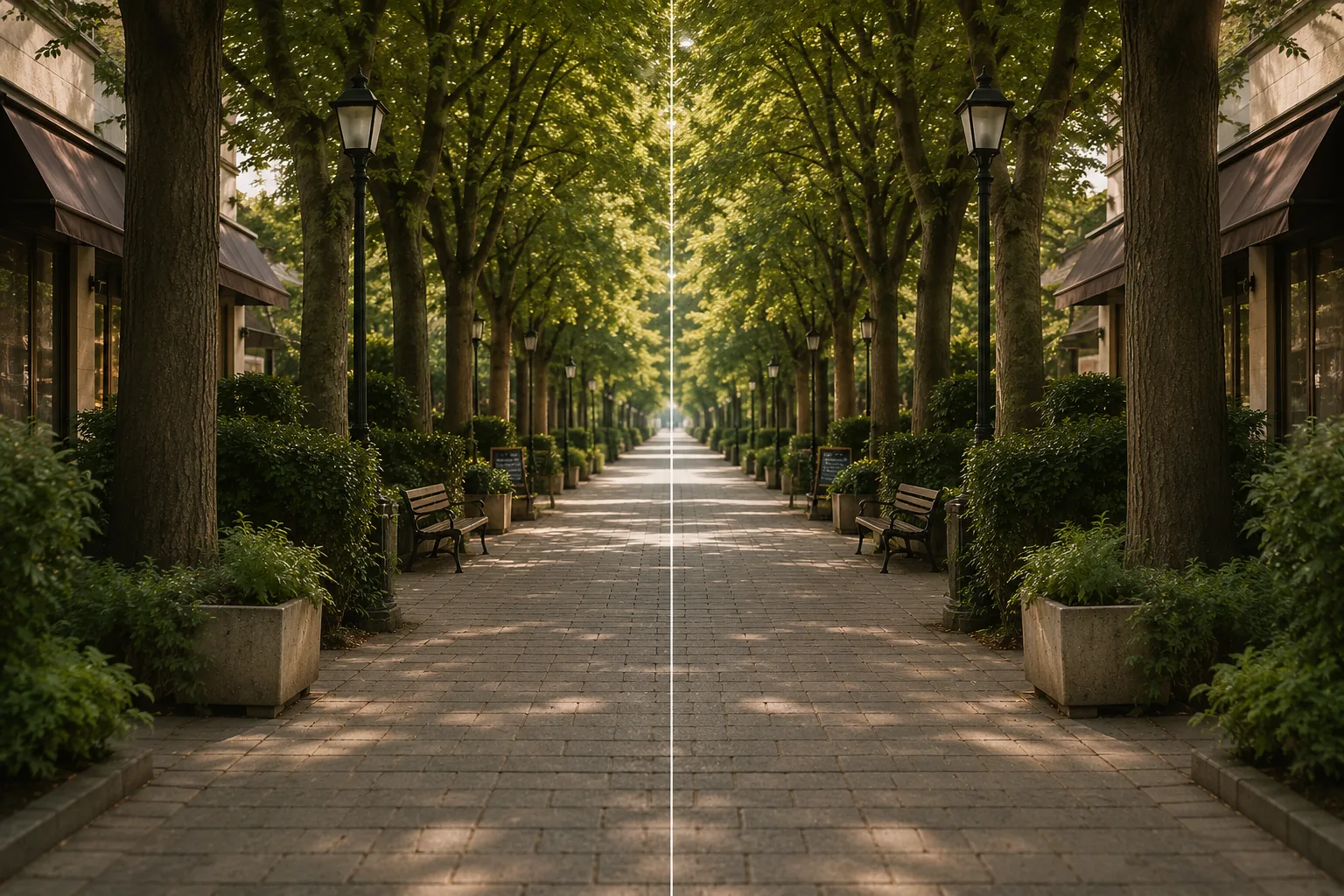
A puddle, a river, a pool, the glass side of a building. When you find something reflecting the sky, try giving half the frame to the sky and half to the reflection. A symmetrical frame looks composed almost by itself (→ Symmetry).
Just this to start
Tap the sky and drop the brightness one step. Let a rooftop or a tree into the bottom of the frame. Those two bring a towering cloud back to the size it felt. On a day when cloud fills the sky, switch to 0.5 and take the whole sweep.
FAQ
The cloud looked huge overhead but tiny in the photo.
Sky alone gives the viewer nothing to measure against. Let a rooftop or the top of a tree into the bottom of the frame and the height reads.
The blue comes out washed out.
The camera is being pulled toward the bright sky. Tap the sky, then lower the brightness a little and the blue deepens. Go too far and the ground turns black, so adjust one step at a time.
Clouds look distorted on the 0.5x ultra-wide.
Ultra-wide lenses stretch shapes toward the edges. Keep the cloud you care about near the center and leave the corners for sky or ground, where stretching doesn't show.
Example gallery
Related reading
Compositions used

Related subject guides

Shooting Landscapes With Depth — Why They Look Flat and How to Level
Shooting Sunsets — Why Sky-Only Shots Fall Flat and How to Catch the Magic Hour

Travel Photos Worth Remembering — Why They Look Like Postcards, and Cropping
Shooting Sunflowers Full of Energy — Why They Look Plain, and Using Blue Sky
Shooting Fireworks Big and Crisp — Fixing Blur and Timing
Shooting the New Year's First Sunrise — Fixing the Blown-Out Sun and Tiny Sun