Shooting Landscapes With Depth — Why They Look Flat and How to Level
Published Jun 27, 2026
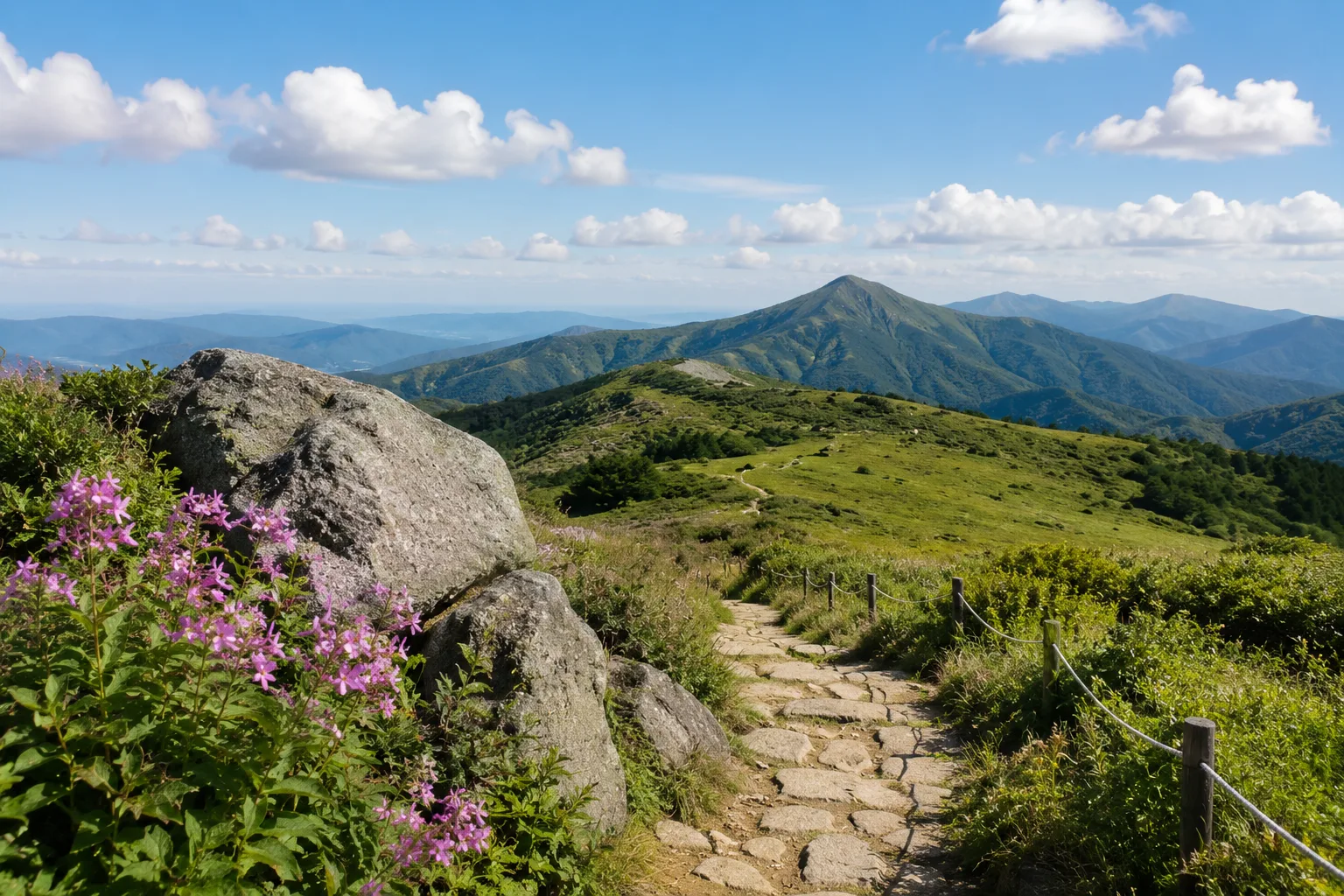
The grander the view, the more often “the real awe doesn’t survive in the photo.” Landscapes look flat because of level, foreground, how you include the sky, and light. Even on a phone, being mindful of composition brings out depth.
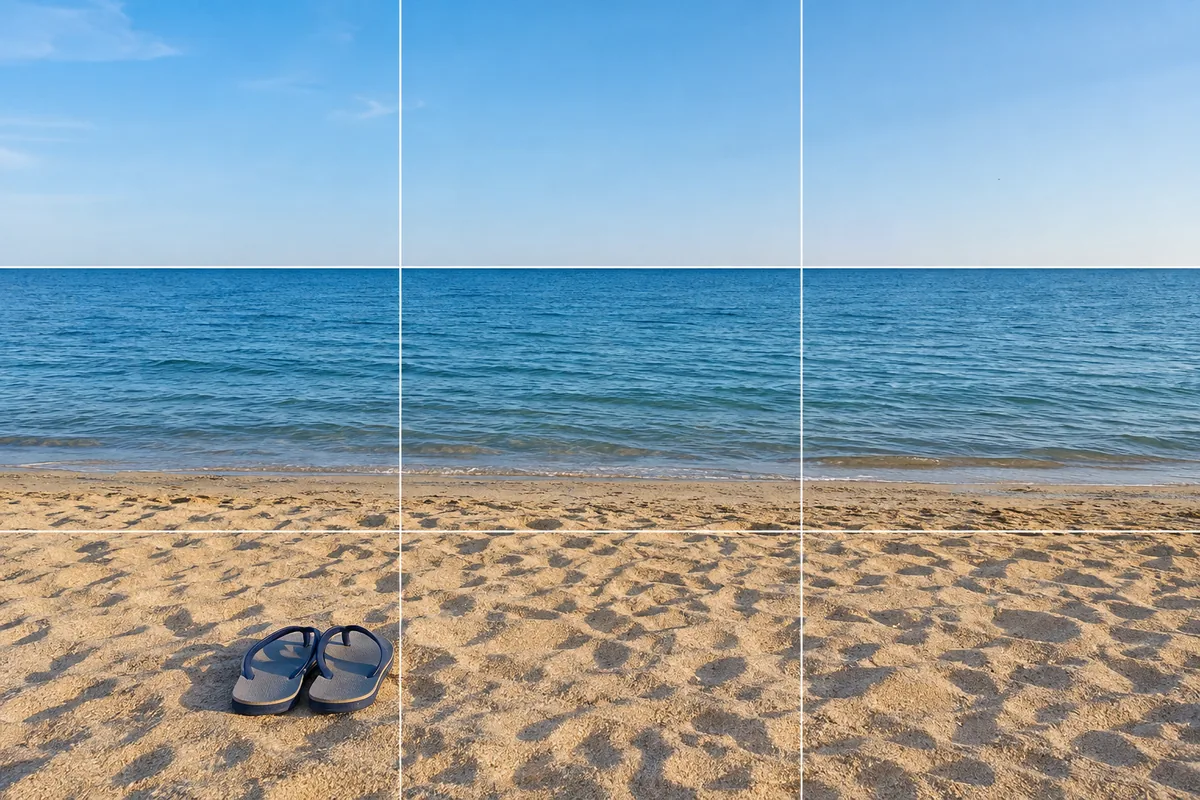
Keep the horizon straight
A slanted horizon or skyline alone feels off. Lining a horizontal grid line up with the horizon steadies it (→ How to use grid lines / Fixing a tilted photo).
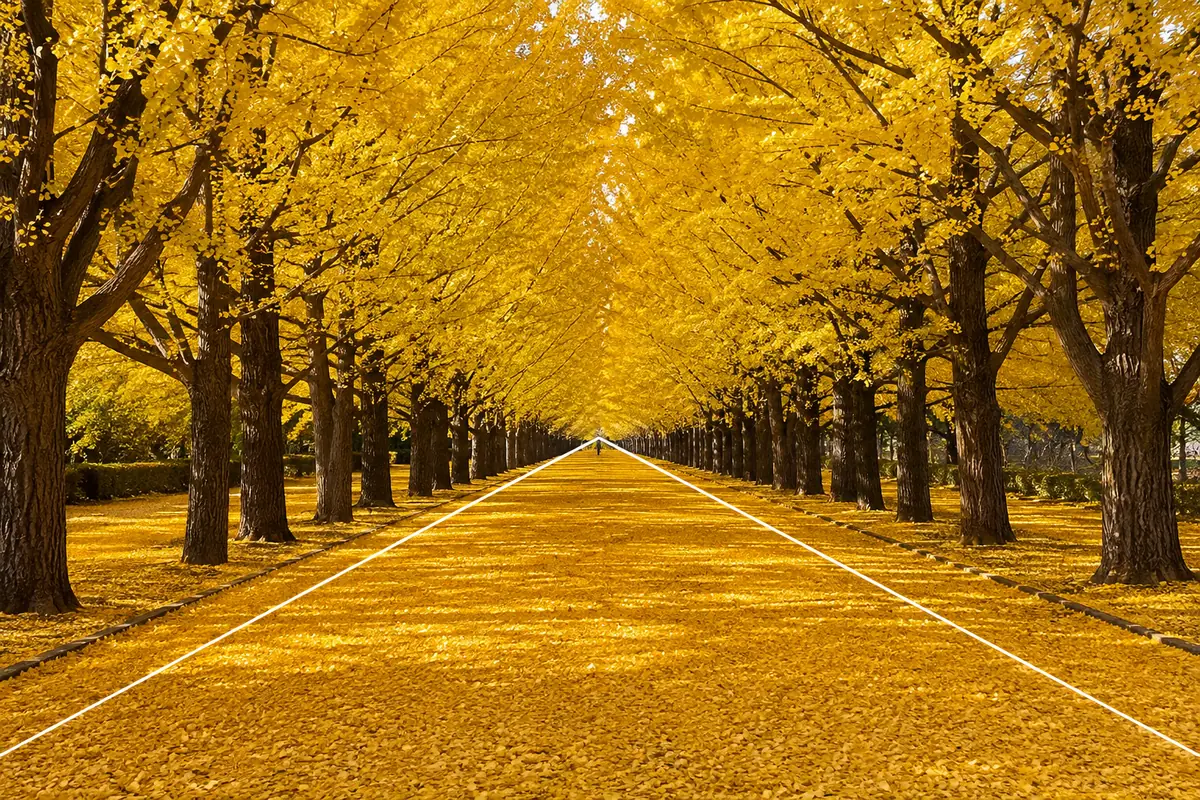
Add a foreground and a line up front
Sky and distance alone give no sense of depth. Put a foreground in front — a rock, flowers, a fence, a person — to form foreground, mid-ground and distance layers for dimension. A line running into the distance, like a road or river, leads the eye inward (→ Leading lines).
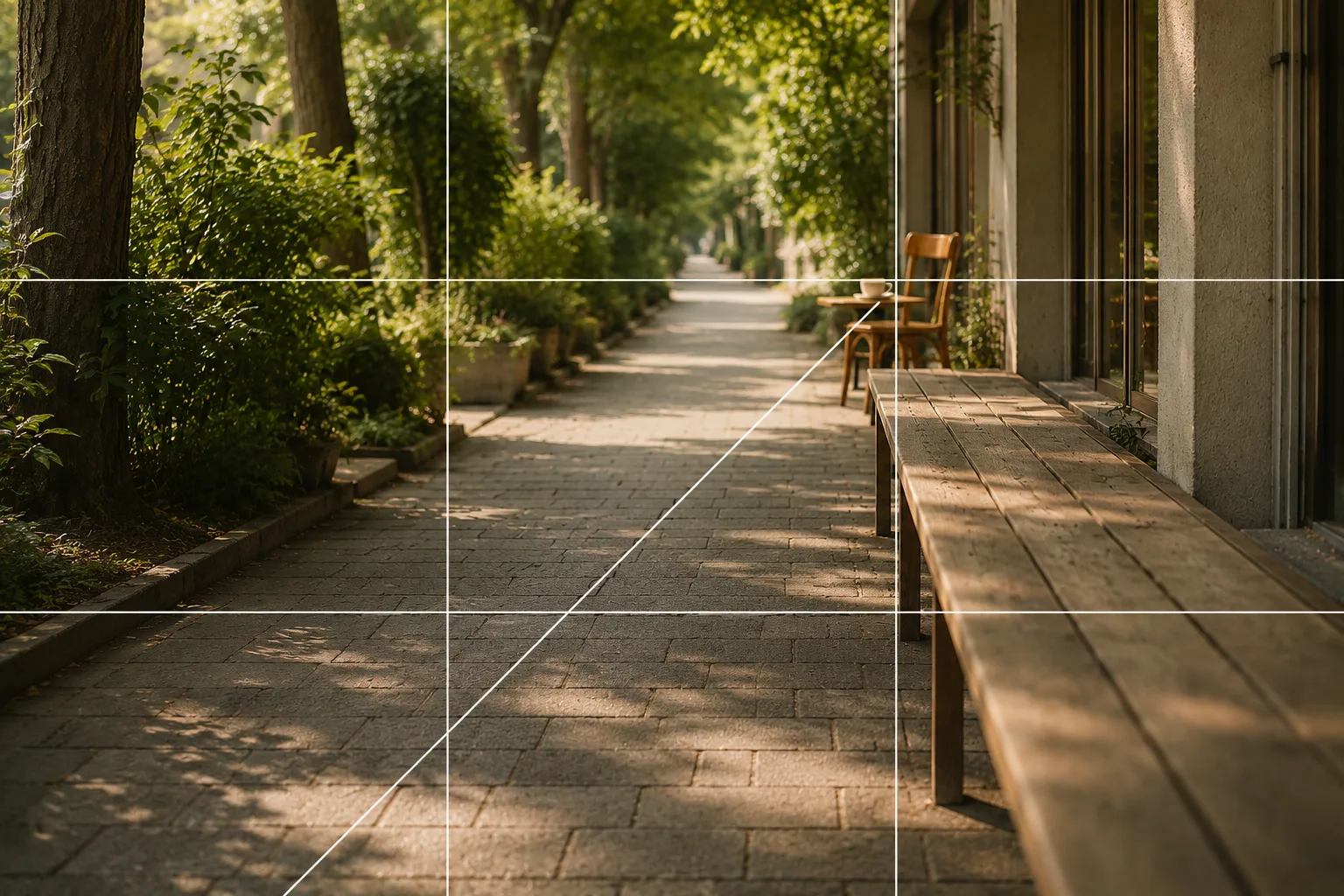 Composition guideLeading linesSee the full guide for this composition →
Balance the sky’s amount and brightness
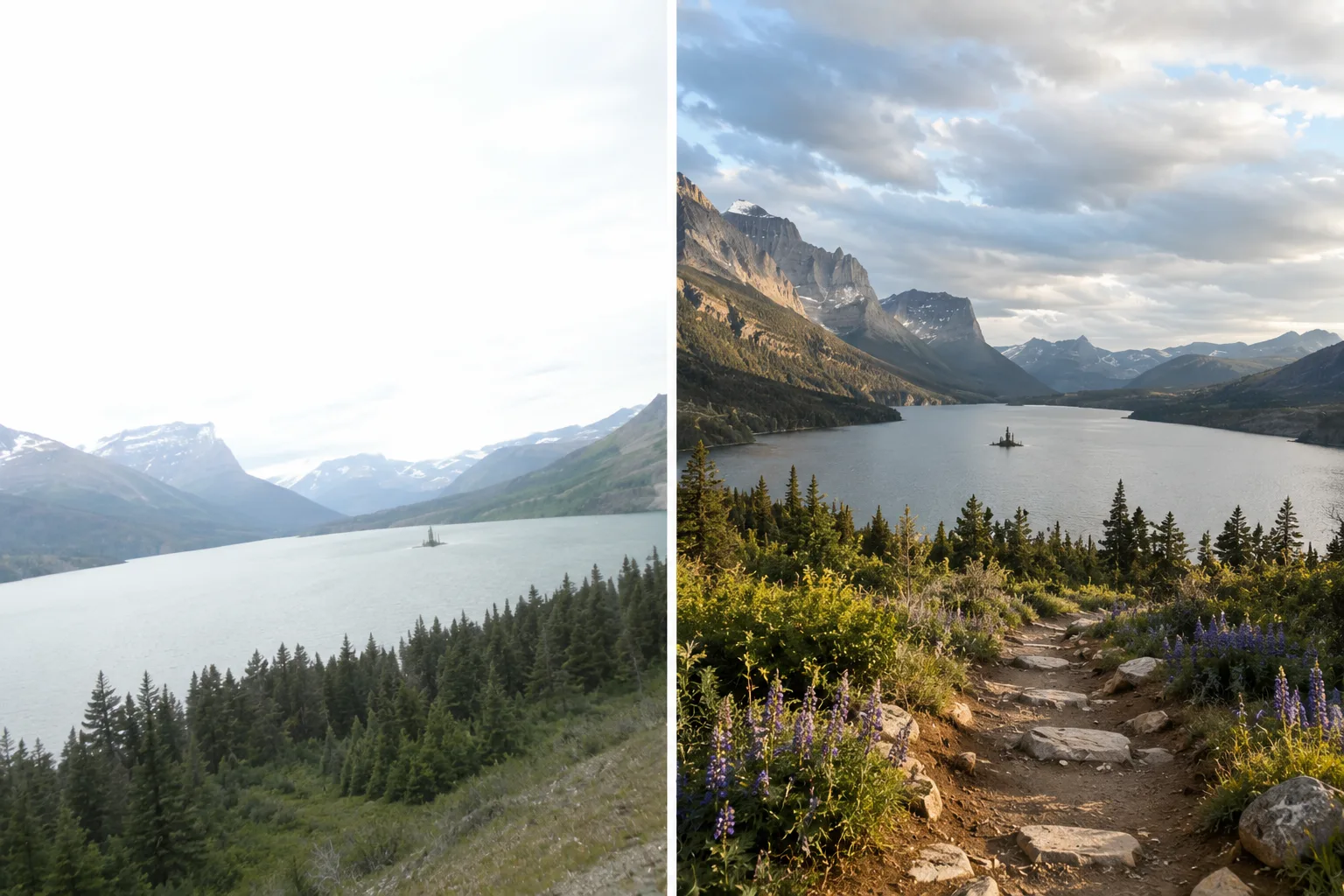
A lot of sky tends to blow out. As a rule, give more frame to whichever you want to show. Set the sky to a third or two-thirds, divided by a horizontal grid line, for a tidy result (→ Rule of thirds). When it darkens being pulled toward the bright sky, adjust the brightness (→ Exposure compensation basics).
 Composition guideRule of thirdsSee the full guide for this composition →
Composition tips
Placing the subject (a mountain, tree, building) on an intersection steadies it. When a river or road curves away into the distance, the golden ratio — the subject at the eye of the spiral, where the curve leads — works too (→ Golden ratio). Soft morning and evening light casts long shadows for dimension. When rays of light fan out through a gap in the clouds, including their source in the frame makes it striking (→ Radial composition). For night views or starry hours, fixing the phone captures it cleanly (→ Night views). The same thinking helps travel snaps (→ Travel photography).
Start with just this
Keep the horizon straight, add a foreground, set the sky’s amount and put the subject on an intersection. Make depth with a line into the distance. That cuts down a lot of landscape “flatness.”
FAQ
My wide views look flat.
Put a foreground — a rock, flowers, a person — in front to create depth. Setting the sky-to-ground ratio with the thirds and keeping the horizon straight alone changes the sense of dimension.
The sky blows out white.
The camera is pulled toward the bright sky. Reduce how much sky you include, or tap the screen and adjust to a brightness where the sky doesn't blow out. Soft morning or evening light keeps more tonal gradation.
Related reading
Compositions used


Related subject guides

Travel Photos Worth Remembering — Why They Look Like Postcards, and Cropping
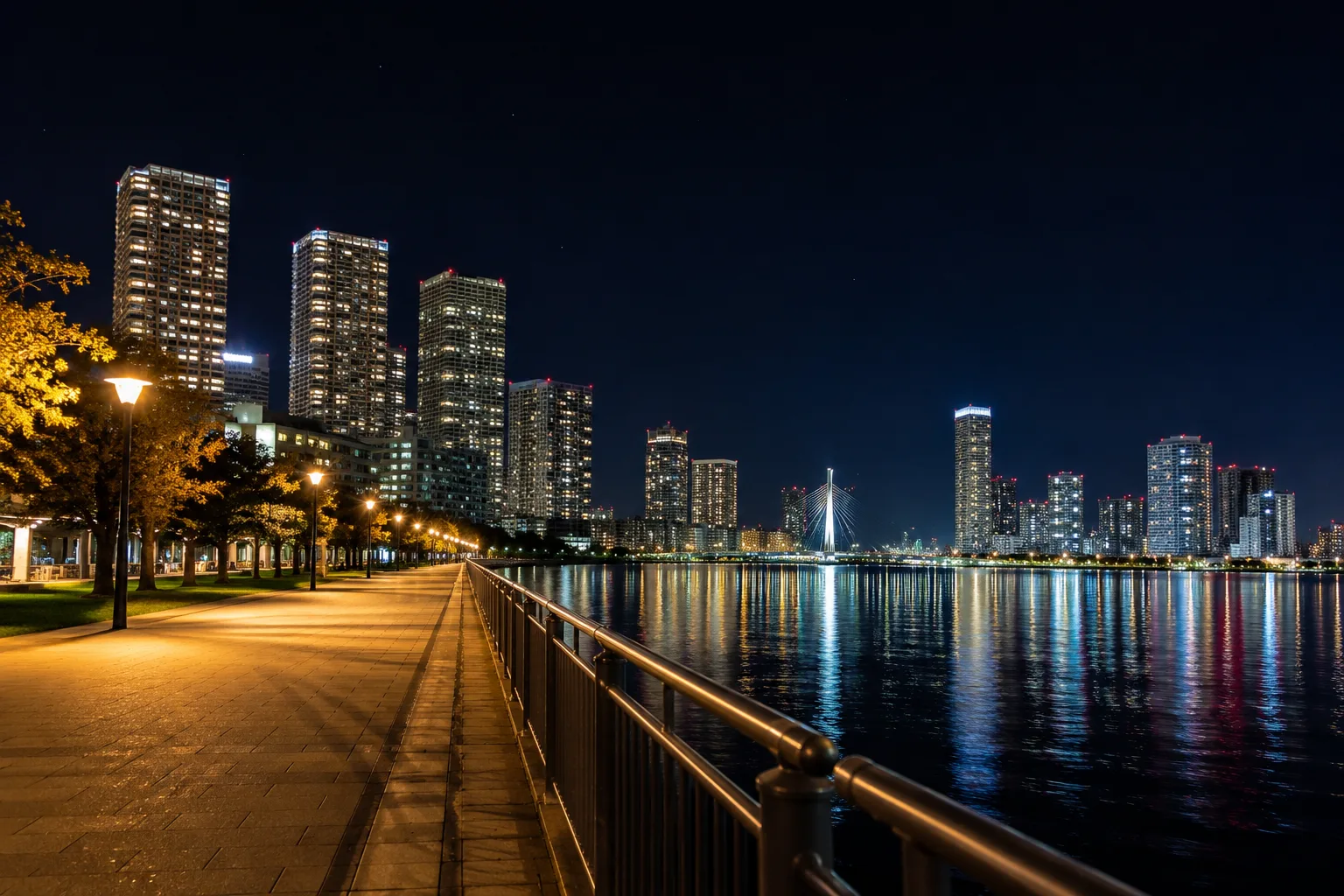
Shooting Night Views and Illuminations Crisp — Why They Blur, and Night Mode

Composing Flowers That Stand Out — Closeness, Light and Background

Shooting Cherry Blossoms Strikingly — Why They Wash Out, and Using Color and Sky
Shooting Sunflowers Full of Energy — Why They Look Plain, and Using Blue Sky
Shooting Fireworks Big and Crisp — Fixing Blur and Timing
Plushie Photos While Traveling — When the Plush Loses to the Scenery or Tilts
Shooting the Moon Clearly — Why It Becomes a White Dot, and What a Phone Can Do
Shooting Snow Truly White — Why It Turns Gray, and the Fix
Shooting the New Year's First Sunrise — Fixing the Blown-Out Sun and Tiny Sun

Shooting and Choosing an X Header Photo — Beat the Crop and the Icon Overlap
Shooting Sunsets — Why Sky-Only Shots Fall Flat and How to Catch the Magic Hour
Summer Skies and Towering Clouds — Why They Shrink in the Frame
At the Beach — Why It Blows Out, and Fixing Level and Backlight
Photographing Ginkgo Avenues — Why They Look Flat and How to Use the Rows
Photographing Red Spider Lilies — Why the Red Blocks Up and How to Shoot Drifts