What Is the Golden Ratio? The "Beautiful Proportion" Beyond the Rule of Thirds
Published Jun 27, 2026 / UpdatedJul 4, 2026
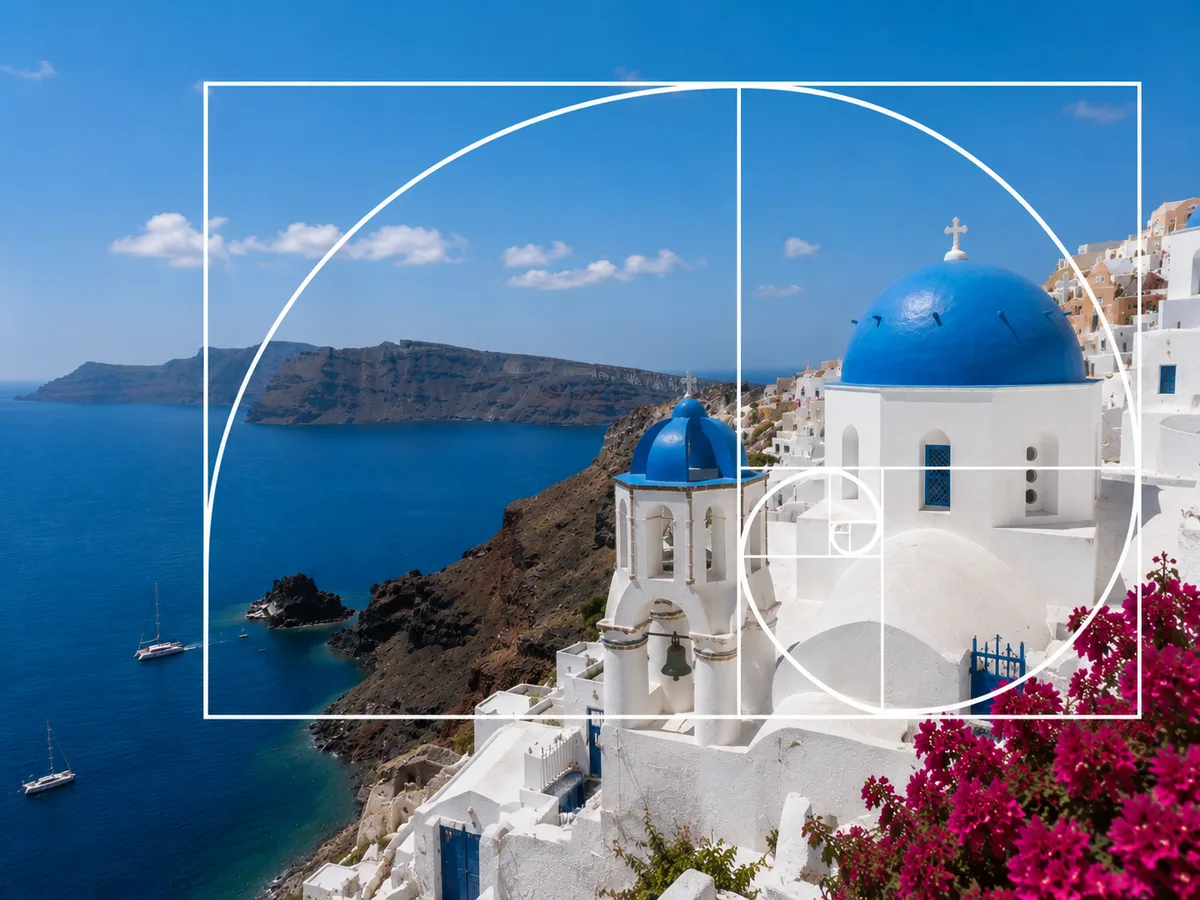
The golden ratio is the idea of arranging elements along a proportion of roughly 1:1.618 (the golden ratio) and the Fibonacci spiral that grows from it. From the seeds of a sunflower to seashells to the composition of old master paintings, it has long been known as a proportion people find beautiful.
Its relationship to the rule of thirds
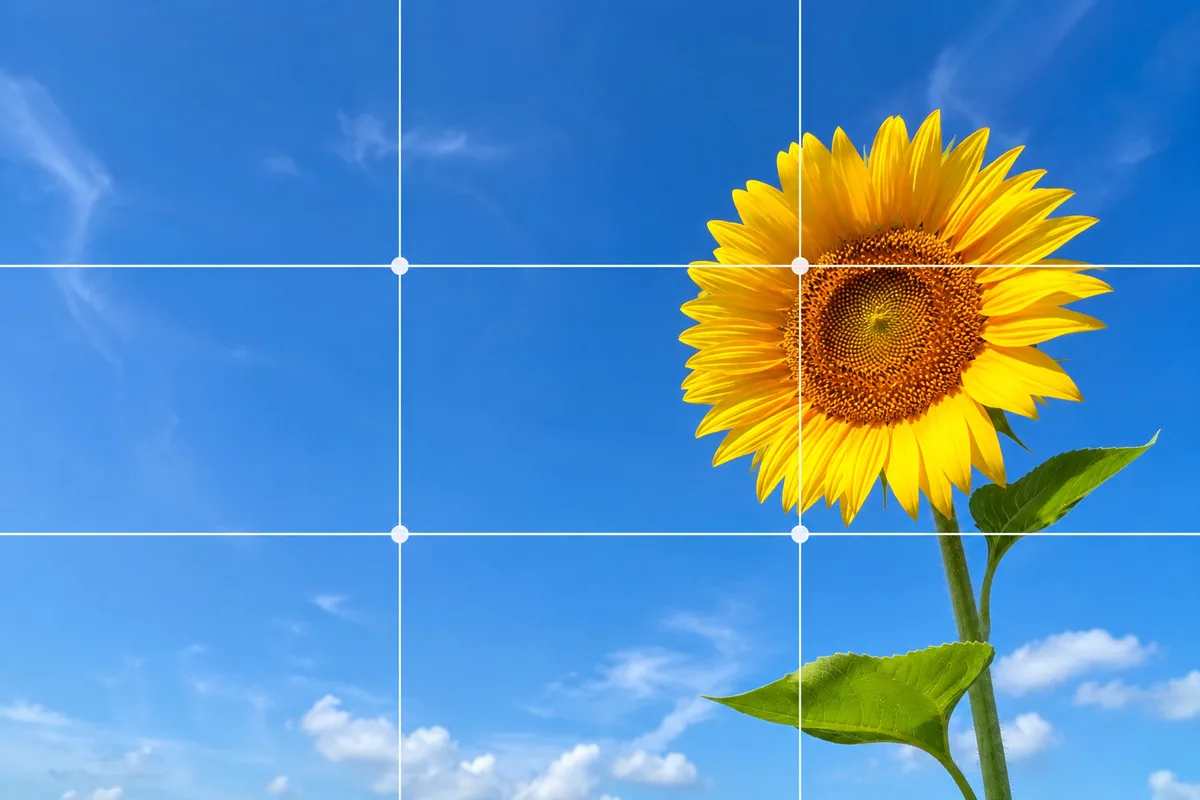
It helps to think of the golden ratio as the rule of thirds taken one step further. The rule of thirds splits the frame into exact thirds; the golden ratio’s dividing lines sit just slightly closer to center. Both aim for the same thing — shift the subject a little off-center and leave open space on the other side. In an actual photo, the difference is tiny.
More a “proportion” than a “composition”
The golden ratio is less a shoot-it-this-way technique like diagonals or framing, and more a theory of proportion that underpins pleasing placement. Your phone’s stock camera doesn’t display golden-ratio guides, so applying it precisely while shooting isn’t easy. Pros and advanced shooters may keep it in mind when finishing an image, but it’s not a composition beginners need to learn first.
Which subjects the golden ratio works for
Where the golden ratio pulls ahead of the rule of thirds is when the subject itself has a spiral, curve, or layered depth. The Fibonacci spiral naturally overlaps with these shapes in nature and architecture.
- A sunflower’s seed pattern: the spiral of seeds curling toward the center is a famous real-world example of the Fibonacci sequence. Place the flower’s center at the eye of the spiral and the subject’s spiral overlaps the frame’s (→ Photographing sunflowers).
- Curling petals and a flower’s center: for flowers whose petals curl inward, like a rose, put the flower’s heart at the eye of the spiral. Seashells belong to the same family (→ Photographing flowers).
- Landscapes layered into the distance: when a river or road curves away into the depth of the scene, treat the curve as the spiral’s flow and place the subject it leads to (a mountain, tree, building) at the eye — the viewer’s gaze flows right to it. Swirling clouds pair well too (→ Landscape photography).
- Staircases and architectural curves: a spiral staircase or a run of arches gives you a curling center to place the subject in (→ Travel photography).
Flat product-style shots, documents, or subjects lined up straight give the spiral nowhere to land — that’s where the rule of thirds and center composition come in. Most shots are well served by the rule of thirds. Beyond that, look for a spiral or curve somewhere in the subject, and if you find one, put the subject at the eye of the spiral — that’s how to judge when the golden ratio earns its keep.
If you still want to try it
The easiest path is turning on a guide where your phone supports one. The Pixel’s stock camera offers a golden-ratio grid under “Grid type” (→ Grid line settings). On other phones, a realistic approach is to shoot with the rule of thirds as usual, then refine the crop afterward with an editing app’s golden-ratio or spiral guide. When using the spiral, place the subject at its eye — the point where it curls in smallest. That’s all you need to remember.
Start with just this
It’s enough to tuck “there’s a beautiful proportion called the golden ratio” into the back of your mind. In practice, make the rule of thirds — usable straight from your grid lines — your foundation. Once you’re comfortable with it and want to go a step further, try placing your subject just slightly closer to center than the intersection. That’s your doorway into the golden ratio. And when you meet a subject with a spiral or curve — the moment it truly shines — place it at the eye. See sunflowers, flowers, landscapes and travel photos for subject-by-subject tips.
FAQ
What is the golden ratio?
The golden ratio is a proportion of roughly 1:1.618. In photographic composition, it means arranging your subject or elements along that ratio, or the Fibonacci spiral that grows from it — a more refined version of nudging the subject off-center than the rule of thirds.
How is the golden ratio different from the rule of thirds?
Both shift the subject slightly off-center. The rule of thirds splits the frame into simple thirds, while the golden ratio divides it at roughly 1:1.618. The dividing lines just sit a touch closer to center — for beginners, the rule of thirds covers it.
Should beginners use the golden ratio?
There's no need to force it. Your phone's stock camera doesn't show golden-ratio guide lines, so it's a bit advanced in practice. Master the rule of thirds first, then it's enough to simply know "there's an even more refined proportion out there."
Can my phone display golden-ratio guide lines?
On Pixel, the stock camera's "Grid type" setting offers a golden-ratio grid. The iPhone's stock camera doesn't have one, but some editing apps let you overlay golden-ratio or spiral guides on a photo after shooting.
How do I use the Fibonacci spiral?
The basic use is placing the subject (a face, flower, building) at the center where the spiral curls in smallest. Treat the spiral's flow as the path of the viewer's gaze — when background elements line up along it, the eye flows naturally to the subject. Rather than matching it exactly, "subject at the eye of the spiral" is all you need to remember.
What subjects does the golden ratio work best for?
Subjects with a spiral, curve, or layered depth — the seed pattern of a sunflower, a seashell, petals that curl inward, a river or road curving into the distance, a spiral staircase. Place the subject at the eye of the spiral and the viewer's gaze flows along the curve straight to it. For flat, straight-lined subjects, the rule of thirds covers it.
Related reading
Compositions used

Related subject guides