Photographing a Moon-Viewing Display — Why the Dumplings Blow Out
Published Aug 27, 2026
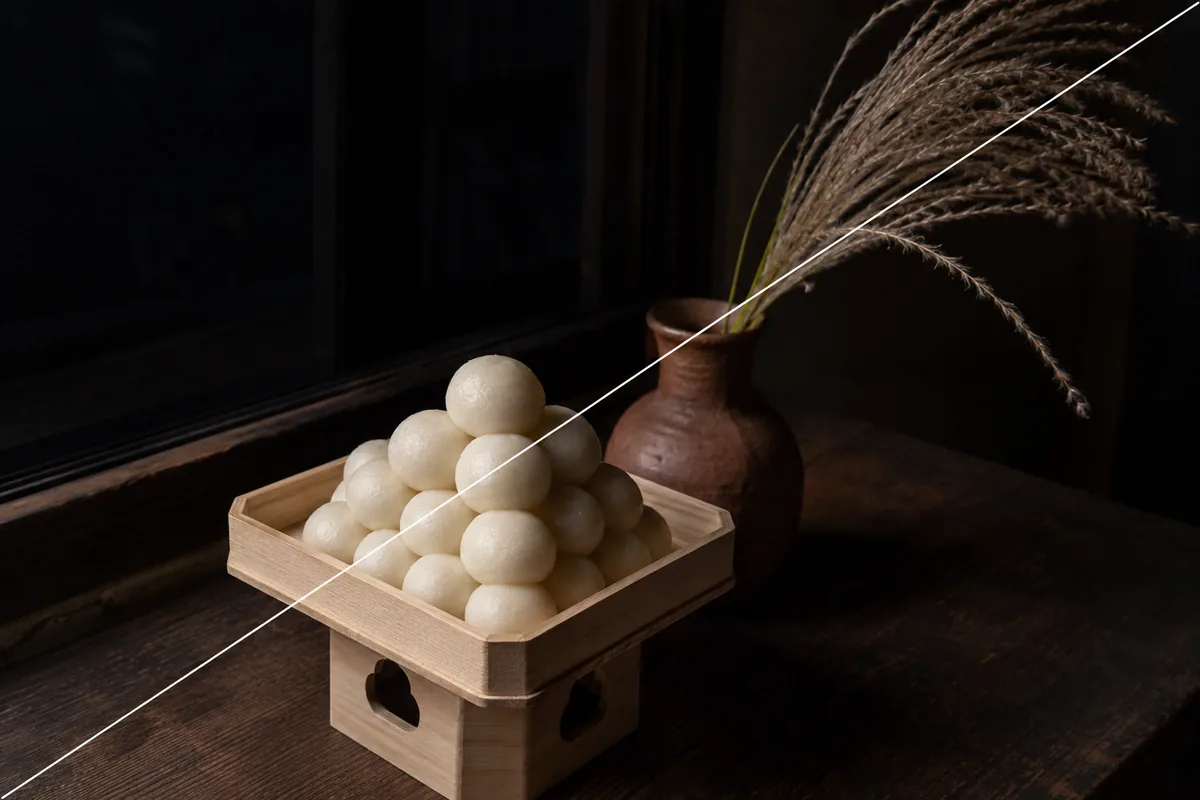
Dumplings and pampas grass set out for the harvest moon, and a photo to remember it by. Then the dumplings come back pure white with no shape, or the grass vanishes into the background, or the whole thing just looks sparse. A moon-viewing display is white objects and fine shapes — the combination phones find hardest.
A step darker gives the dumplings their roundness
White dumplings get overexposed, and the shading that describes their shape disappears. Tap them, then swipe up or down to go a step darker and the roundness and the smooth surface come back (→ Adjusting brightness).
Dumplings stacked on a stand or in a bowl read best from around 45 degrees. Straight down shows the arrangement neatly, so use the angle when you want the stack to read as a stack (→ How to photograph sweets).
Darken the background to lift the white
Both the dumplings and the grass lose presence against a bright background. Simply choosing something dark behind them makes the white pop and gives the plumes an outline.
At night, set them against a window with the lights off. In daytime, use dark cloth or a dark wall. That alone brings the quiet the occasion deserves. Leaving generous space around the display adds to it (→ Negative space).
 Composition guideNegative spaceSee the full guide for this composition →
Light pampas grass from the side
The plumes are fine and fluffy, so light from the front renders them flat. Find a position where the light comes in from the side and each strand picks up shading and texture.
Within the arrangement, the grass supplies the vertical lines. Put the bowl of dumplings low and let the grass cross the frame on a slant for a more dynamic layout (→ Diagonal composition).
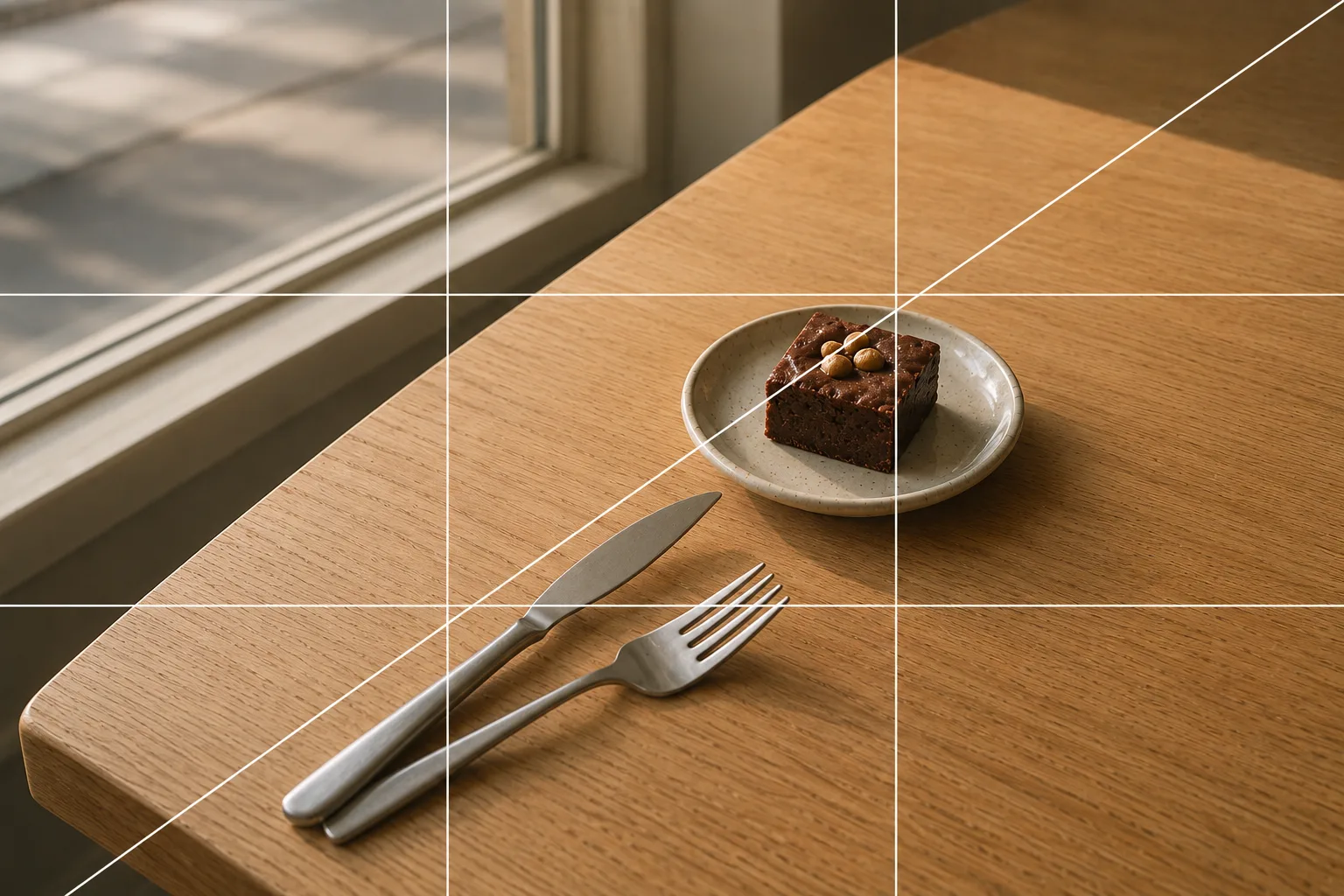 Composition guideDiagonal compositionSee the full guide for this composition →
Window light, or a warm lamp
The most reliable light is a window during the day. Soft light comes in at an angle and describes both the dumplings and the plumes. A sheer curtain softens the shadows further.
Shooting at night, a low warm lamp beats the ceiling light for mood. It’s darker, so camera shake creeps in — plant your elbows on the table or rest the phone on something solid (→ Shooting in dim rooms).
Shoot the moon as a separate frame
It’s tempting to get the moon and the display together, but the moon is extremely bright and the display in front of you is dim. The gap is too wide: expose for one and the other fails.
Better to shoot one frame of the display and one of the moon, and show them as a pair. The moon itself has its own approach (→ How to photograph the moon). If you must have both, the window is just after moonrise, when the moon sits low and the sky still holds light — that’s when the difference is smallest.
Add a few autumn stems
Beyond pampas grass, bush clover, gentian or small wildflowers bring color into the frame. They’re supporting cast, not the subject, so keep them smaller than the dumplings and toward the edge (→ How to photograph flowers).
Just this to start
Tap the dumplings and drop the brightness a step. Darken the background. Shoot from around 45 degrees. Those three turn a moon-viewing display from blown-out white into something quiet and atmospheric. Shoot the moon separately and show the two together.
FAQ
My dumplings blow out white and lose their shape.
White dumplings are exactly what a camera tends to overexpose. Tap them and drop the brightness a step, and the roundness and surface texture return. A dark background makes the white stand out further.
When I put the moon and the display in one frame, one of them fails.
The moon is extremely bright and the display is dim, so the gap is too wide to hold both. Shooting one frame of the display and one of the moon, then showing them side by side, works far better.
Is the harvest moon always a full moon?
Not necessarily. The traditional date follows the old lunar calendar while the full moon depends on the positions of the moon and sun, so they land a day or two apart in some years. Photos of the display don't depend on the date, so a clear evening works just as well.
The pampas grass disappears into the background.
The plumes are fine, so a busy background swallows their outline. Find a position where they stand against a dark wall or a night window. Light from the side brings out the fluff.
Example gallery
Related reading
Compositions used
Related subject guides
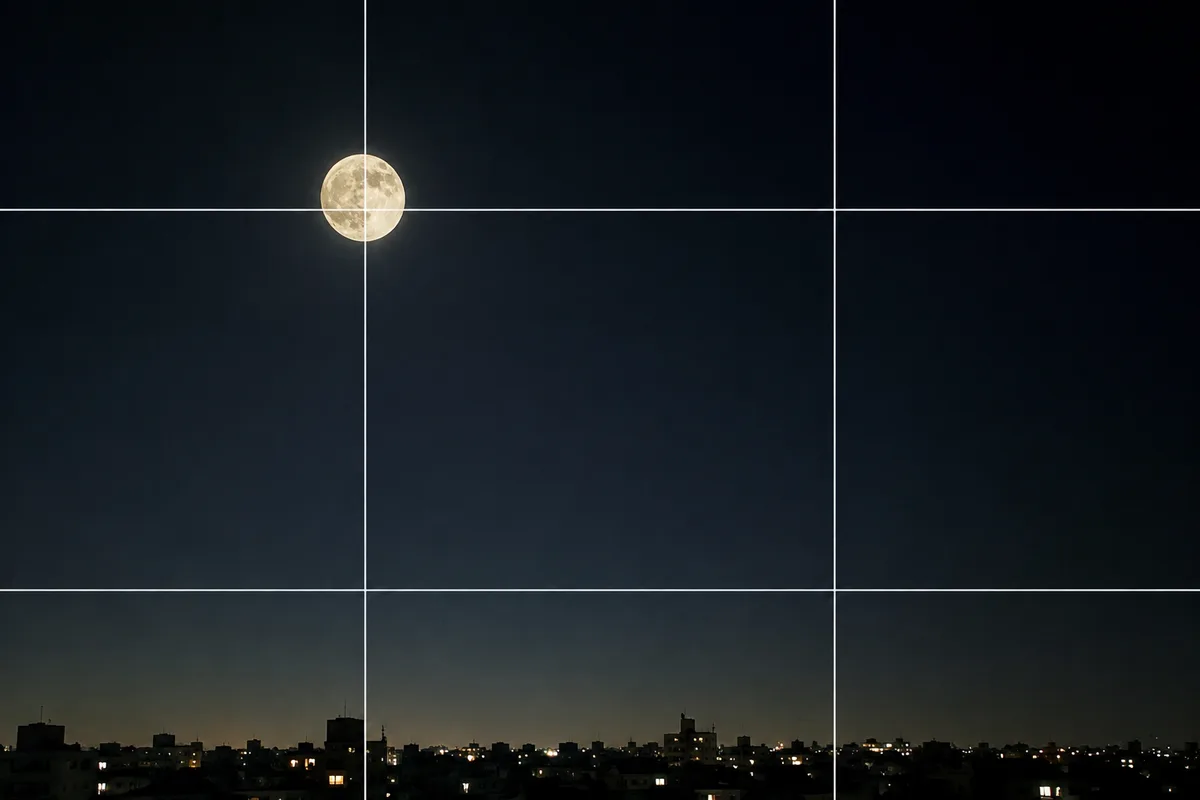
Shooting the Moon Clearly — Why It Becomes a White Dot, and What a Phone Can Do
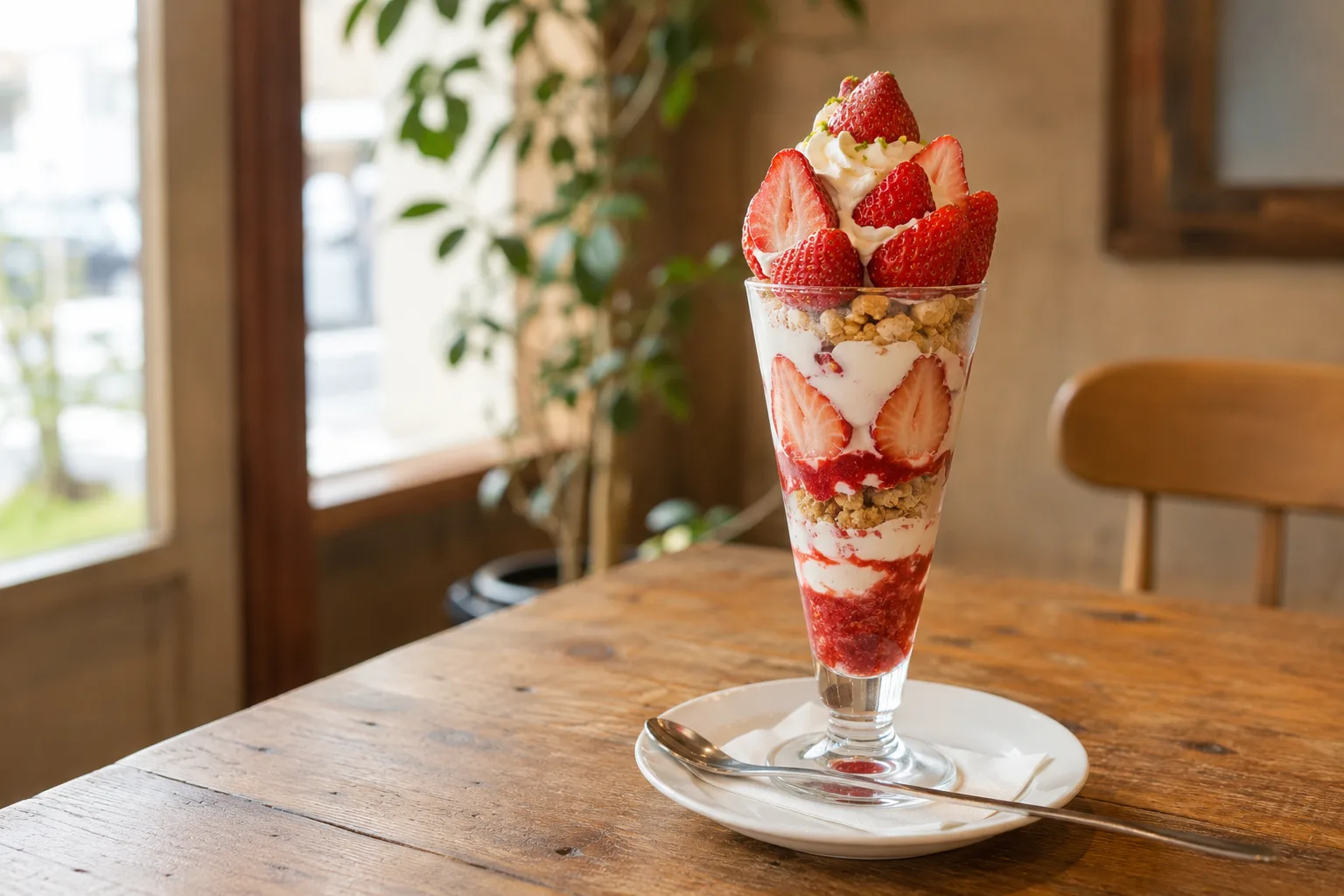
Composing Sweets and Parfaits That Pop — Showing Height and Gloss
How to Make Food Look Delicious — Why It Looks Bland and How to Fix It
Shooting Night Views and Illuminations Crisp — Why They Blur, and Night Mode
Composing Flowers That Stand Out — Closeness, Light and Background
Composing Stylish Café Photos — Why They Don't Pop and How to Fix It