Shooting at Aquariums and Zoos — Fixing Glass Reflections and the Dark Indoors
Published Jul 10, 2026
The jellyfish in the big tank, the animal that came right up to the glass — and the photo shows a washed-out pane with your own reflection and the hallway lights. Aquariums and zoos pack three of phone photography’s hardest problems into one outing: glass reflections, dark interiors, and subjects that never stop moving. Here’s what a phone can do about each.
Turn the flash off
One bit of prep before you start: turn the flash off. Many facilities prohibit or discourage it out of care for the animals, and for the photo it only bounces off the glass and whites out the frame — there’s no upside. With it off, both manners and pictures are safe. While you’re at it, give the lens a quick wipe; that indoor haze is often just a fingerprint (→ Wipe the lens and everything changes).
Press the lens close to the glass to erase reflections
The single best trick for shooting through glass: bring the lens right up to the glass, almost touching. Reflections come from light in the gap between lens and glass — remove the gap and there’s nowhere for them to live. Ease in gently so you don’t knock the glass. Then block the light behind you with your free hand or your body and the effect doubles. Darker clothing reflects less than white — a handy thing to remember when dressing for the trip. Polarizing filters exist for big cameras, but with a standard phone camera, “get close and block the light” is realistically most of the toolkit.
Don’t over-brighten the dark tanks
In dark halls, the camera tends to auto-brighten until the deep blue of the tank fades. Tap your subject, then swipe the sun icon down to keep some of the darkness — the rich aquarium blue comes back (→ Adjusting brightness). And don’t lean on Night mode for swimming fish — it’s built for still scenes (→ Using Night mode). For steadiness, tuck your elbows in and hold with both hands; where the layout allows, resting the phone against a rail or the tank frame helps further. The fundamentals live in Shooting in dark rooms.
Use burst mode and let the subject come to you
Fish and animals don’t pose. Shoot bursts and pick the best frame afterward (→ Using burst mode). The other trick: don’t chase — wait where they’ll be. Circling fish tend to repeat their route, so set the composition first and let them swim into it. For catching expressions and eye contact, the ideas in Pet photos carry straight over.
Compose by going close, or letting them swim
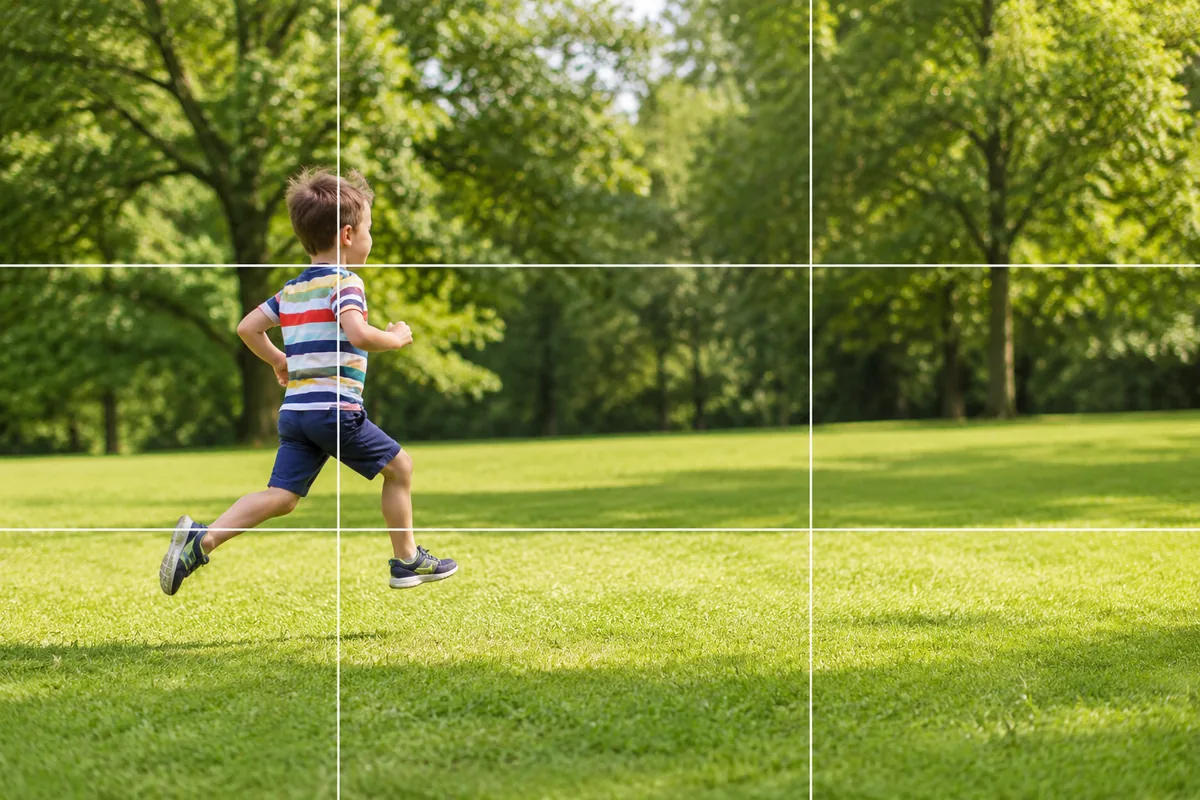
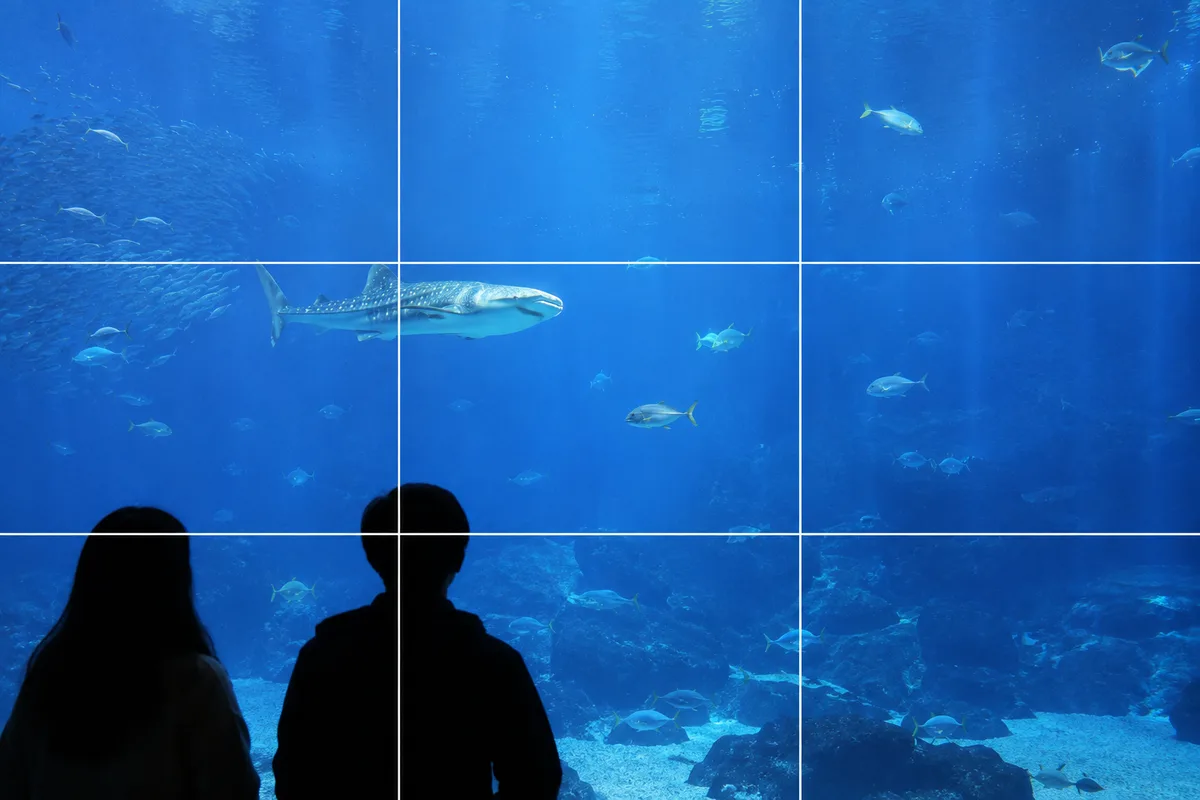
When something comes right to the glass, you’re already positioned to fill the frame with texture (→ Fill the frame). At a big tank, flip the idea: use the blue water as generous negative space (→ Negative space). Place a fish on a rule of thirds intersection with open water ahead of it, and even a small fish makes a picture.
Know what a phone can’t do
Honestly: shooting a distant animal large is a phone’s weak spot. Stop zooming just before the image gets grainy; beyond that you’re trading picture quality (→ Optical vs digital zoom / How phone cameras work, and their limits). Scratched or fogged glass, thick distorting acrylic — no technique removes those. Deciding “this tank is a lost cause” and finding a better window is often the fastest route to a good photo.
 Composition guideFill the frameSee the full guide for this composition →
 Composition guideRule of thirdsSee the full guide for this composition →

Start with just this
Flash off, lens wiped. Press the lens close to the glass and block the light behind you with your body. Keep a little darkness in the exposure, use bursts, and wait rather than chase. Fill the frame when they come close; use the blue as negative space when they don’t. That’s enough to bring home a photo that feels like the day actually felt.
FAQ
Is flash really not allowed at aquariums?
Many facilities prohibit or discourage flash photography out of care for the animals — follow each facility's rules. For the photo itself, flash only bounces off the glass and whites out the frame, so turning it off is the right call either way.
Should I use Night mode for dark tanks?
Not for swimming fish. Night mode gathers light over several seconds, and anything that moves during that time blurs. You'll have better luck waiting for a moment of stillness, or shooting bursts and picking the sharpest frame.
The reflections just won't go away.
Usually the lens is too far from the glass, or a light or bright clothing behind you is reflecting strongly. Bring the lens right up to the glass and block the light behind you with your hand or body. If it still won't clear, the tank's own lighting is often the cause — finding a different angle or tank is faster than fighting it.
Related reading
Compositions used