Photographing Rainy Days — Why They Look Gloomy, and Droplets as the Subject
Published Aug 27, 2026
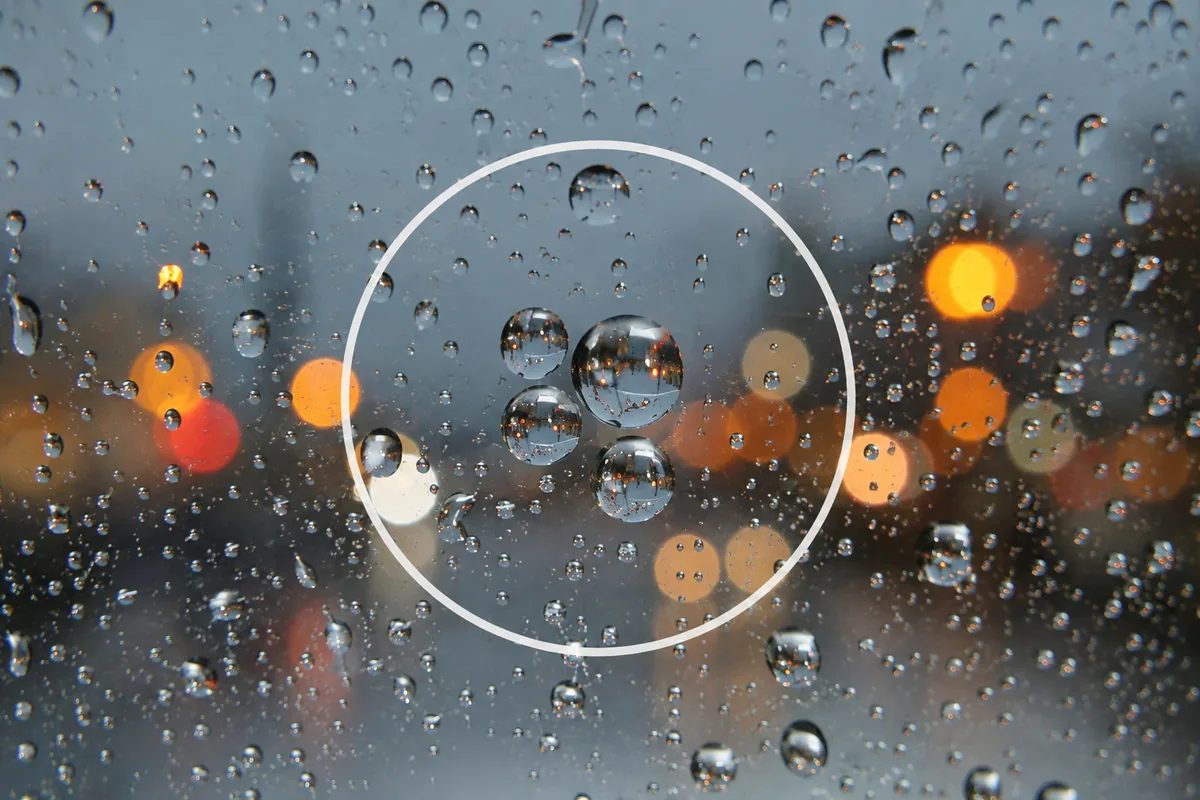
Rainy days are easy to write off. Grey sky, dark streets, low spirits. But there are things you can only photograph in the rain: droplets, reflections, and soft light.
Overcast means no harsh shadows
A rainy or cloudy sky scatters light like one enormous softbox. None of the hard shadows a sunny day brings — which makes it a genuinely good day for flowers, food and faces. If the photo looks dark, that’s a shortage of light, not a problem with the color or the texture.
When a shot comes out darker than it felt, tap the screen and raise the brightness a little (→ Adjusting brightness). One step brighter turns “dreary” into “quiet.” Some subjects, hydrangeas among them, genuinely suit the rain (→ How to photograph hydrangeas).
Lock focus on the droplets
The classic rainy-day frame is droplets on a window, and the whole thing hinges on locking focus onto them. Left alone, the camera focuses on the street beyond and the droplets read as smudges on the glass.
- Hold the phone 10 to 15cm from the glass — closer than that and it won’t focus
- From that position, press and hold on the droplets to lock focus (→ Locking focus)
- Moving in or back releases the lock, so keep the distance and shoot. For the background, look for something lit — a streetlight, a traffic signal — so the blur turns into round points of light
If the glass is covered in droplets, moving right in until they fill the frame works too (→ Filling the frame).
 Composition guideFill the frameSee the full guide for this composition →
Use the reflection on wet pavement
Wet asphalt and paving stones mirror the lights of the street. Bring the camera almost down to the ground and the reflection grows. Crouch and lower the hand holding the phone to your feet — that’s the whole technique.
When you spot a puddle, find the position where the building or the sky mirrors symmetrically above and below (→ Symmetry). After dark, reflected streetlights and neon become the subject on their own (→ How to photograph night views).
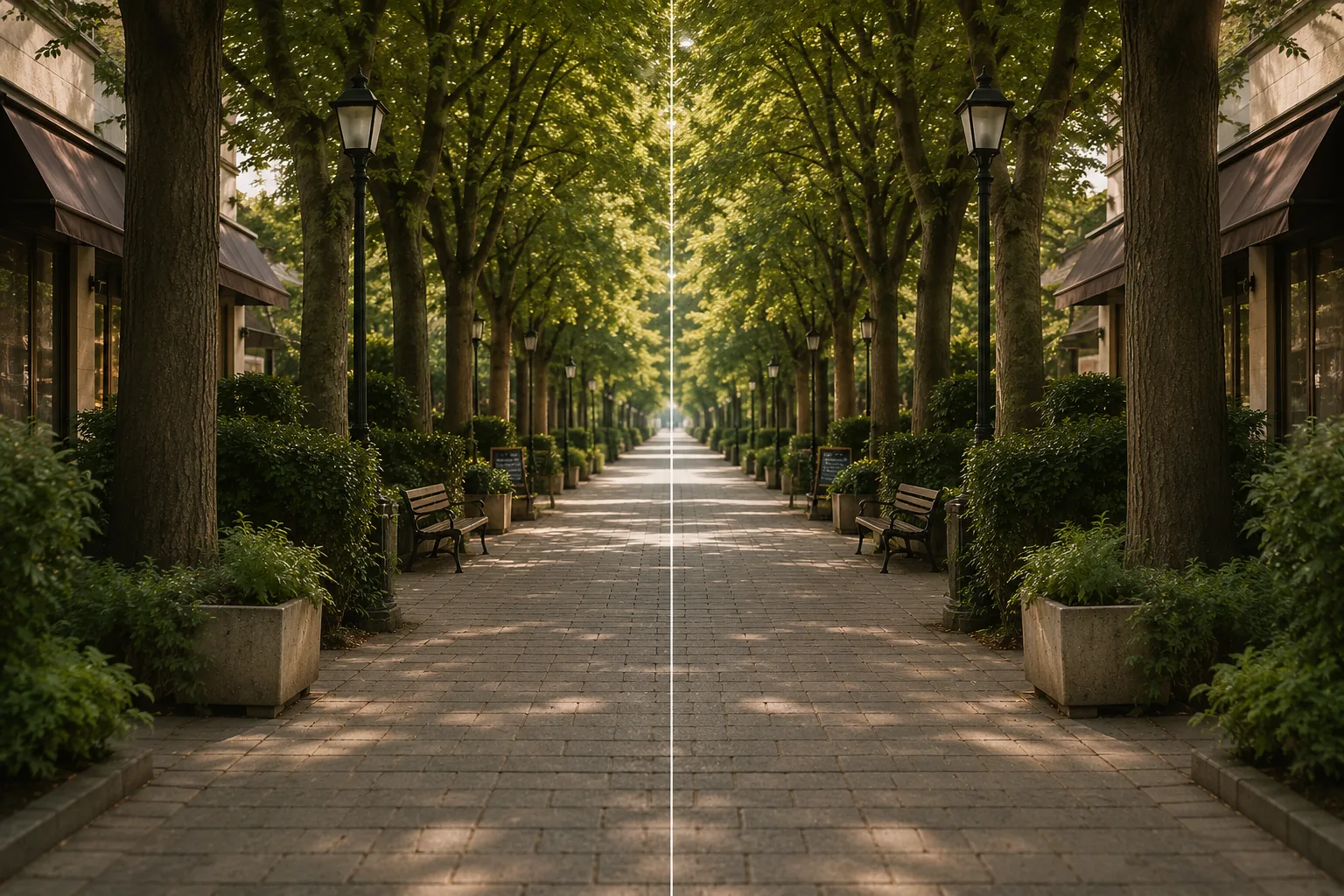 Composition guideSymmetrySee the full guide for this composition →
Umbrellas work as color and shape
An umbrella is a prop you only get to use in the rain. Even a plain one, if it has color, stands out against all that gray. Look down from above to show the circle; shoot someone from behind holding one; put a single umbrella at the end of an alley. Leave plenty of room around it and the quiet of the rain comes through (→ Negative space).
Shoot from somewhere dry
There’s no need to head out into the downpour. Inside a window, under a station canopy or an arcade, from the car, from a café table. A covered spot is steadier to shoot from, and the through-the-droplets, through-the-glass framing that says “rain” comes naturally (→ How to photograph cafés). Afterwards, wipe any droplets off the lens with a soft cloth so the next shot isn’t hazy (→ Cleaning your lens).
Just this to start
Press and hold on the droplets to lock focus. Raise the brightness one step. Those two alone turn a rainy day from “too dark to bother” into something you can only get in the rain. Umbrellas and puddles are for when you have room to spare.
FAQ
My rainy-day photos come out dark and dreary.
Overcast light is weak, so the camera tends to expose dark. Tap the screen and raise the brightness a little and the whole frame lifts. Cloudy days cast no hard shadows, which actually renders color and texture beautifully.
I can't get the droplets on the window in focus.
The camera is focusing past them onto the street. Press and hold on the droplets to lock focus first. Holding the phone too close also prevents focus — about 10 to 15cm from the glass works well.
I'd rather not take my phone out in the rain.
Then don't. Inside a window, under a station canopy or a café awning, from the car — a covered spot is calmer to shoot from, and it's where the through-the-glass compositions come from anyway.
Example gallery
Related reading
Compositions used


Related subject guides
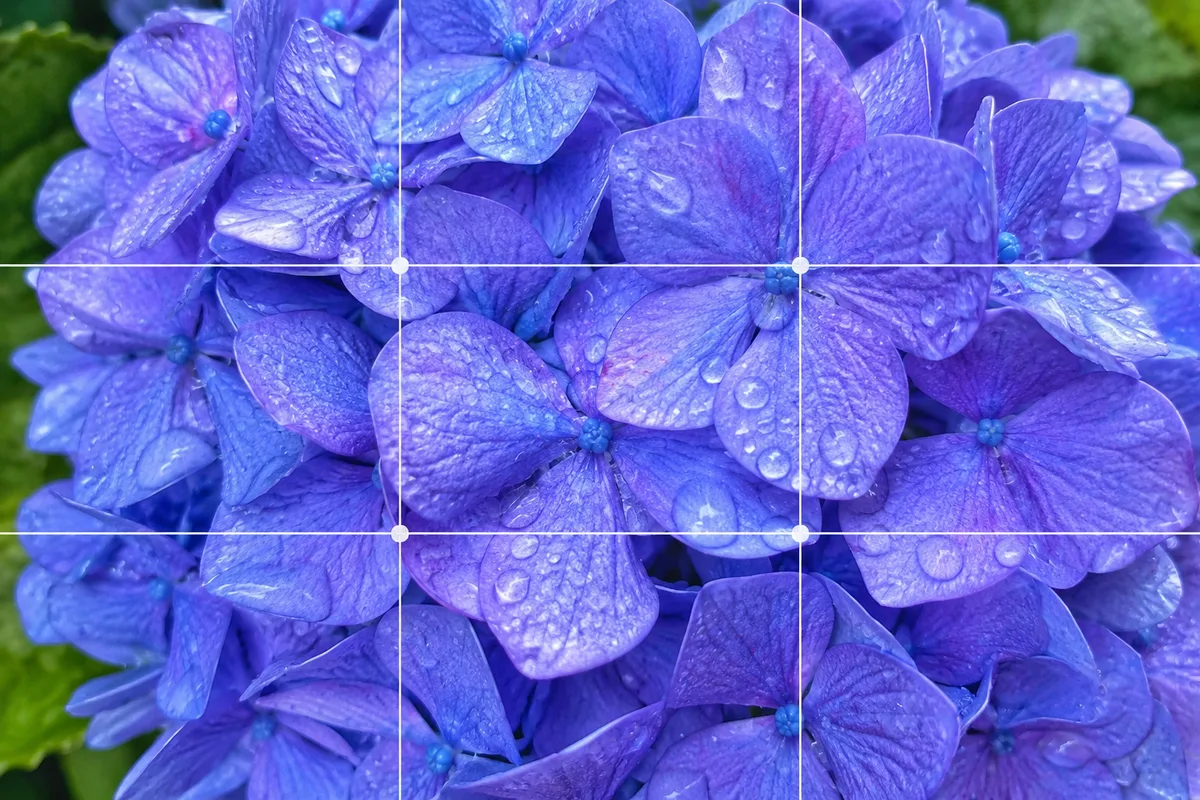
Shooting Fresh, Dewy Hydrangeas — Why They Look Hazy, and Bringing Out Color
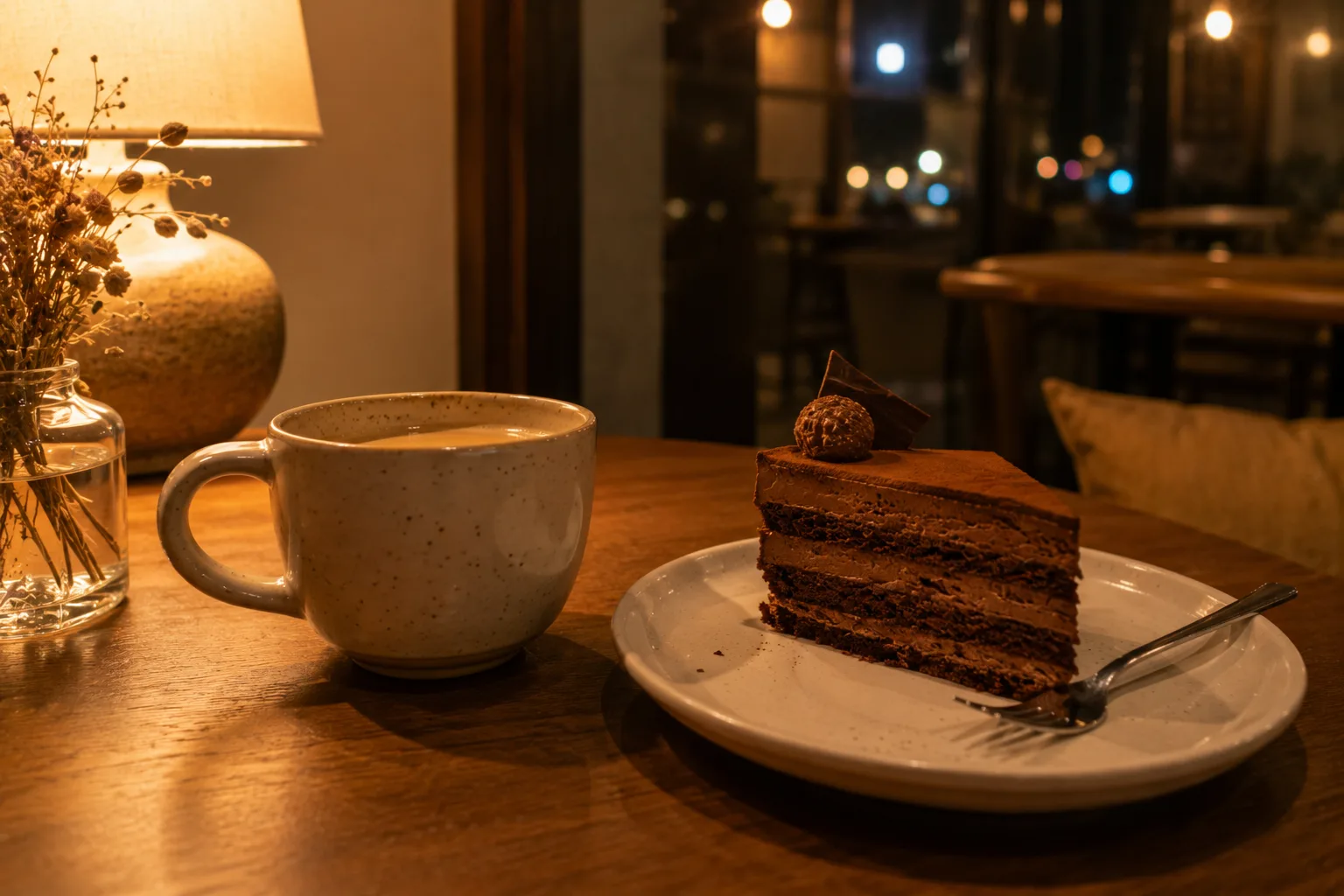
Shooting Cleanly in a Dark Room — Why It Blurs and Goes Dark, and the Fix

Composing Stylish Café Photos — Why They Don't Pop and How to Fix It
Composing Flowers That Stand Out — Closeness, Light and Background
Shooting Night Views and Illuminations Crisp — Why They Blur, and Night Mode
Travel Photos Worth Remembering — Why They Look Like Postcards, and Cropping